
More / Blog posts
Blog posts
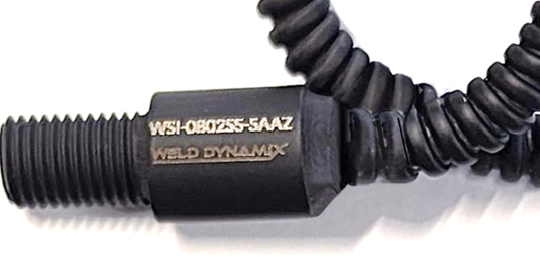 April 21 2025 · Steve CoulterArmored ProxesA new solution to the industry - Stainless Steel Armor - integrated with the sensor body - to reduce the most common failure for sensors with cable outputs...
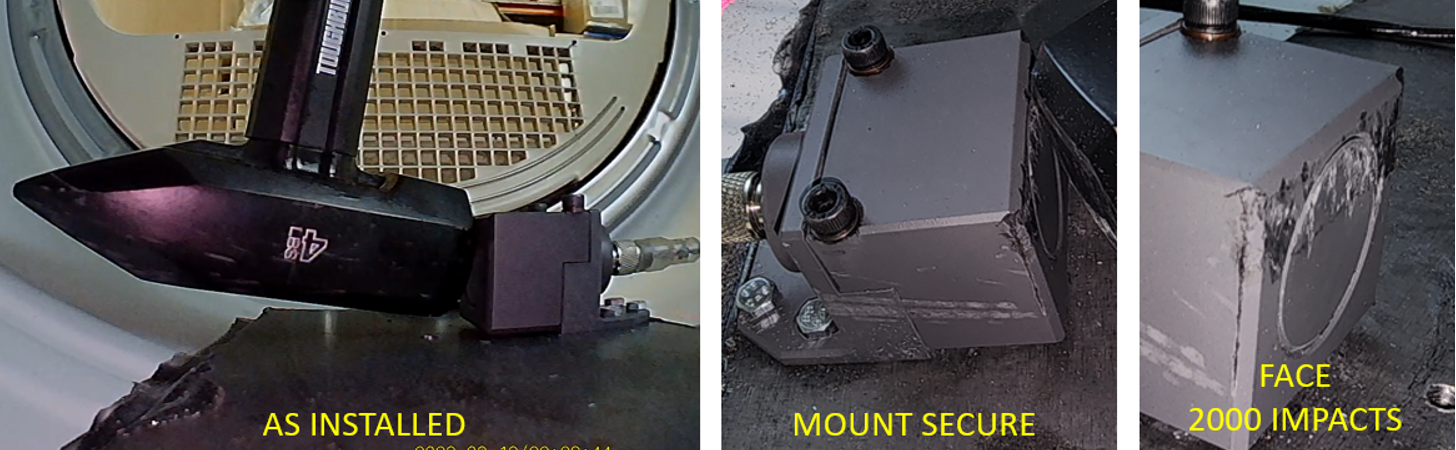 March 01 2024 · Steve CoulterNot a Fair Fight - CUBE 40 mount vs Top CompetitorWe tested the CUBE 40 Sensor Mount (Adapts 30mm sensors to the 40mm cubic format) against several top competitor's sensors in the 40mm cubic format
Below is a highlight between the top performing competitive sensor and the CUBE 40 with 30mm WSI sensor: Both sensors mounted to the same bolt pattern in a steel baseplate with steel screws. 4lb steel sledgehammer.
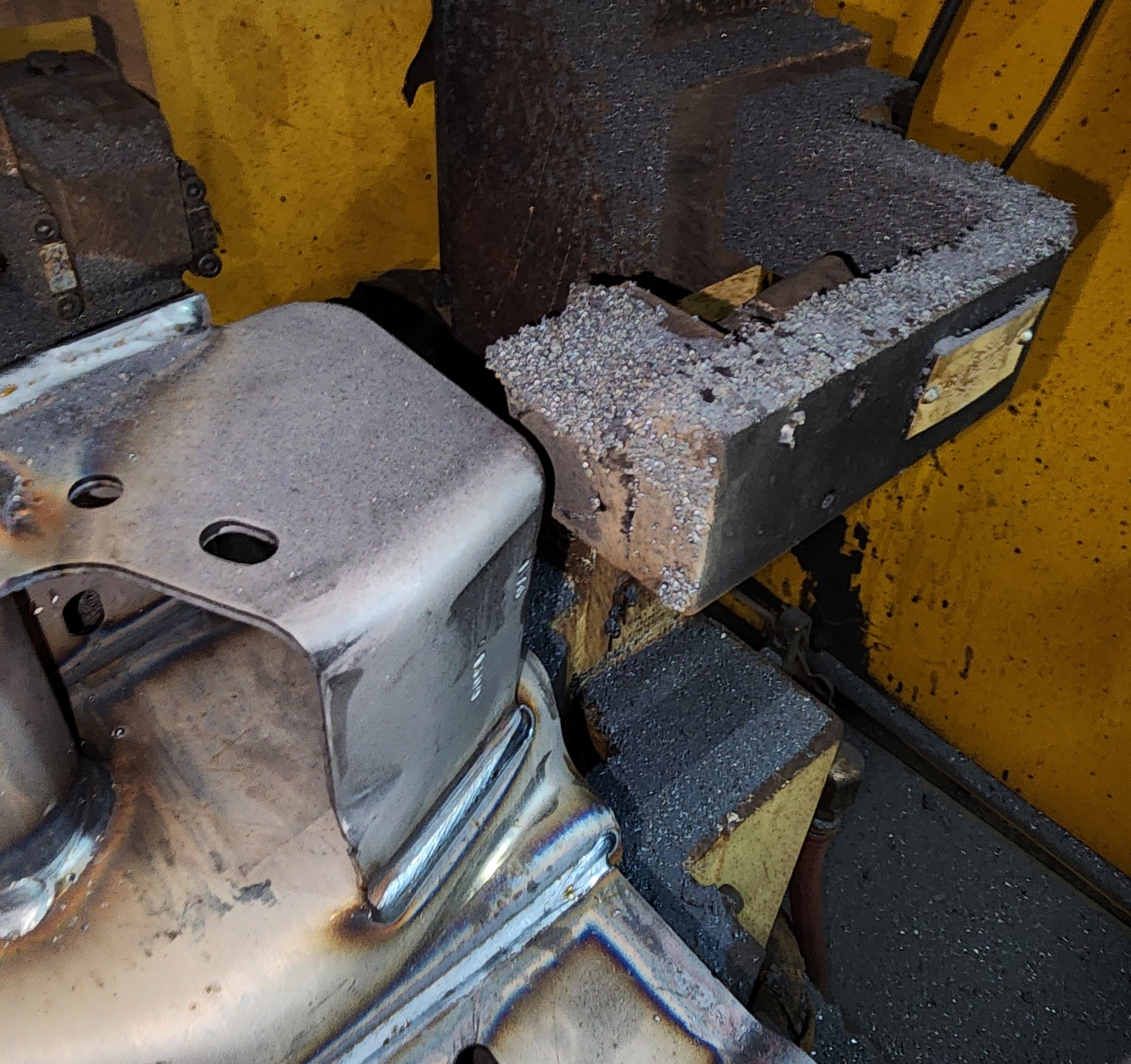
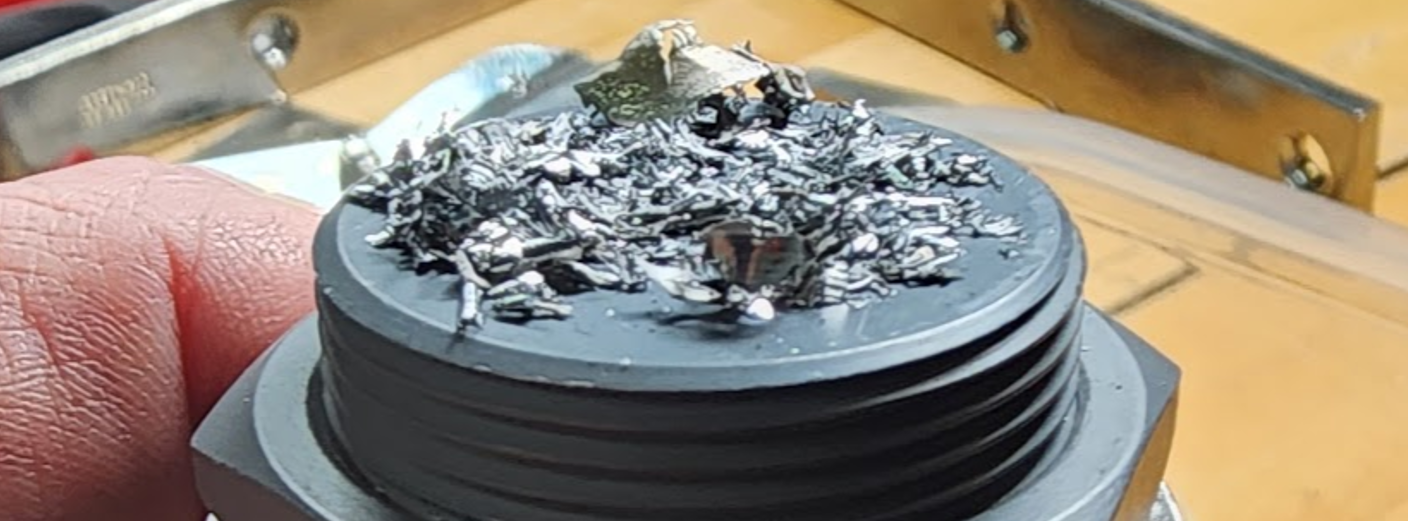 December 05 2023 · Steve CoulterMassively Chip ImmuneThis picture basically tells the story.
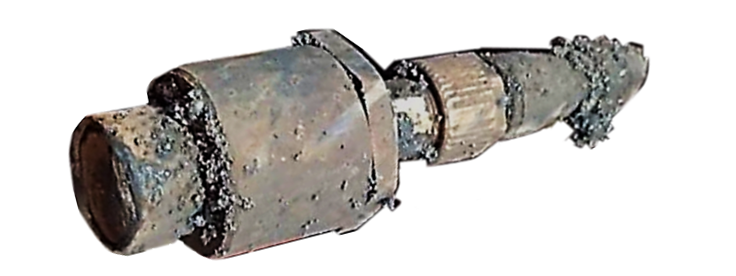
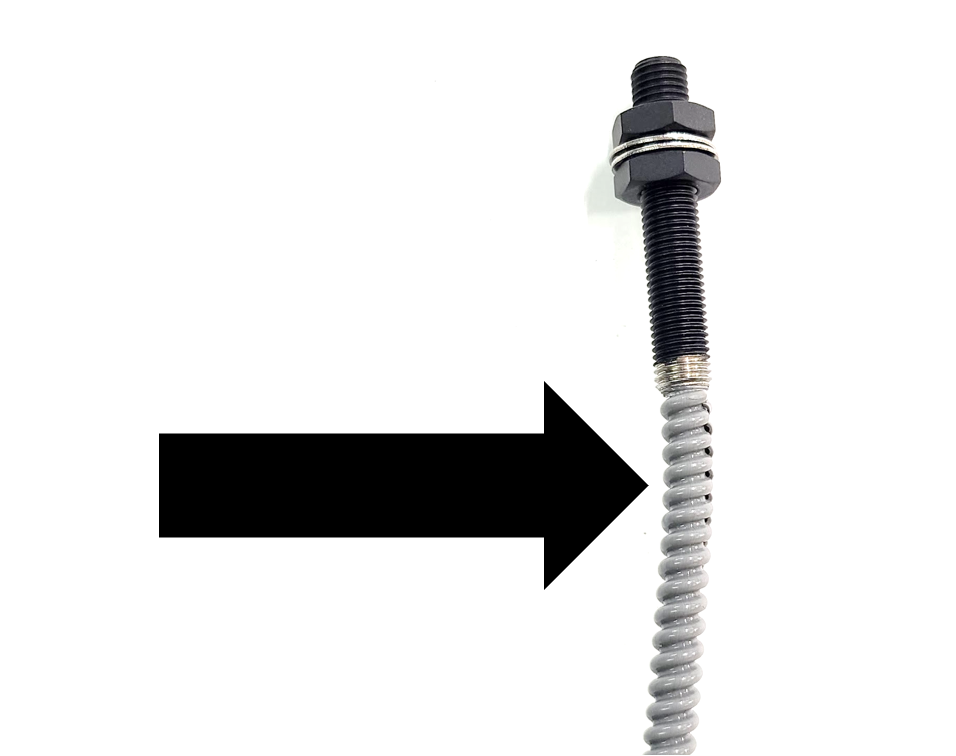 November 29 2023 · Steve CoulterSensors With Cables (they die fast, but there is hope)I think you all will agree that sensors with integrated cables die out quickly - its almost always the cable that goes. No mystery why. Fragile, small diameter PVC or PUR cable jackets poke out the end of a sensor - these are easily cut, melted or chaffed, leaving no choice but to replace the entire sensor assembly.
Below you can foresee the destiny of this flat pack.
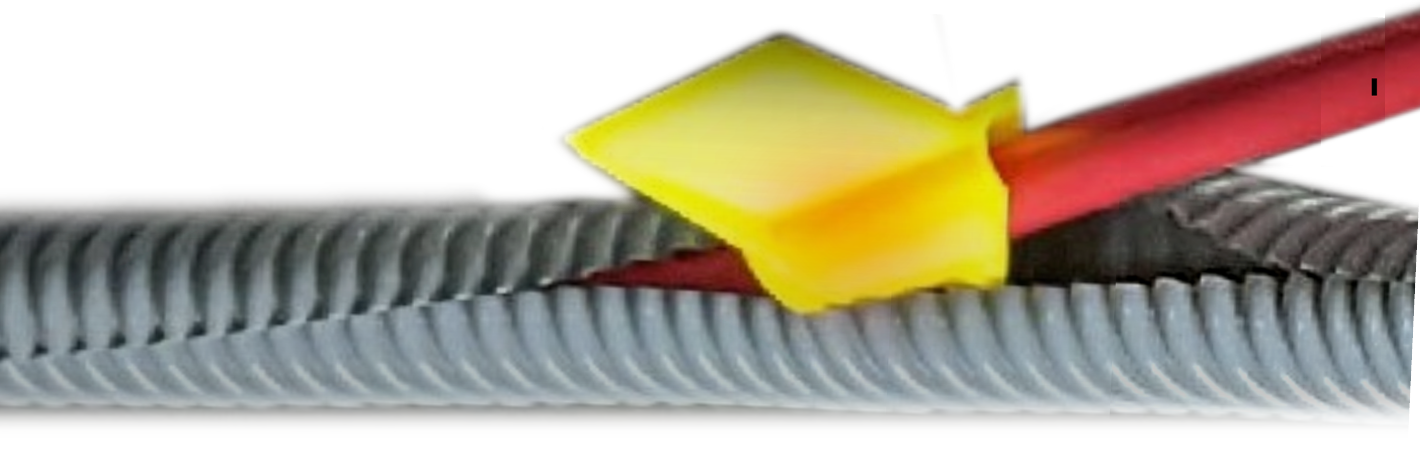 October 31 2023 · Steve Coulter"Where's that yellow tool?" ACTIVFLEX Install Tool MultipackFor large plants and users of the ACTIVFLEX tubing, we've heard that the tools get lost or grow legs - and without that tool the install is not quite as slick. So we came out with this multipack:
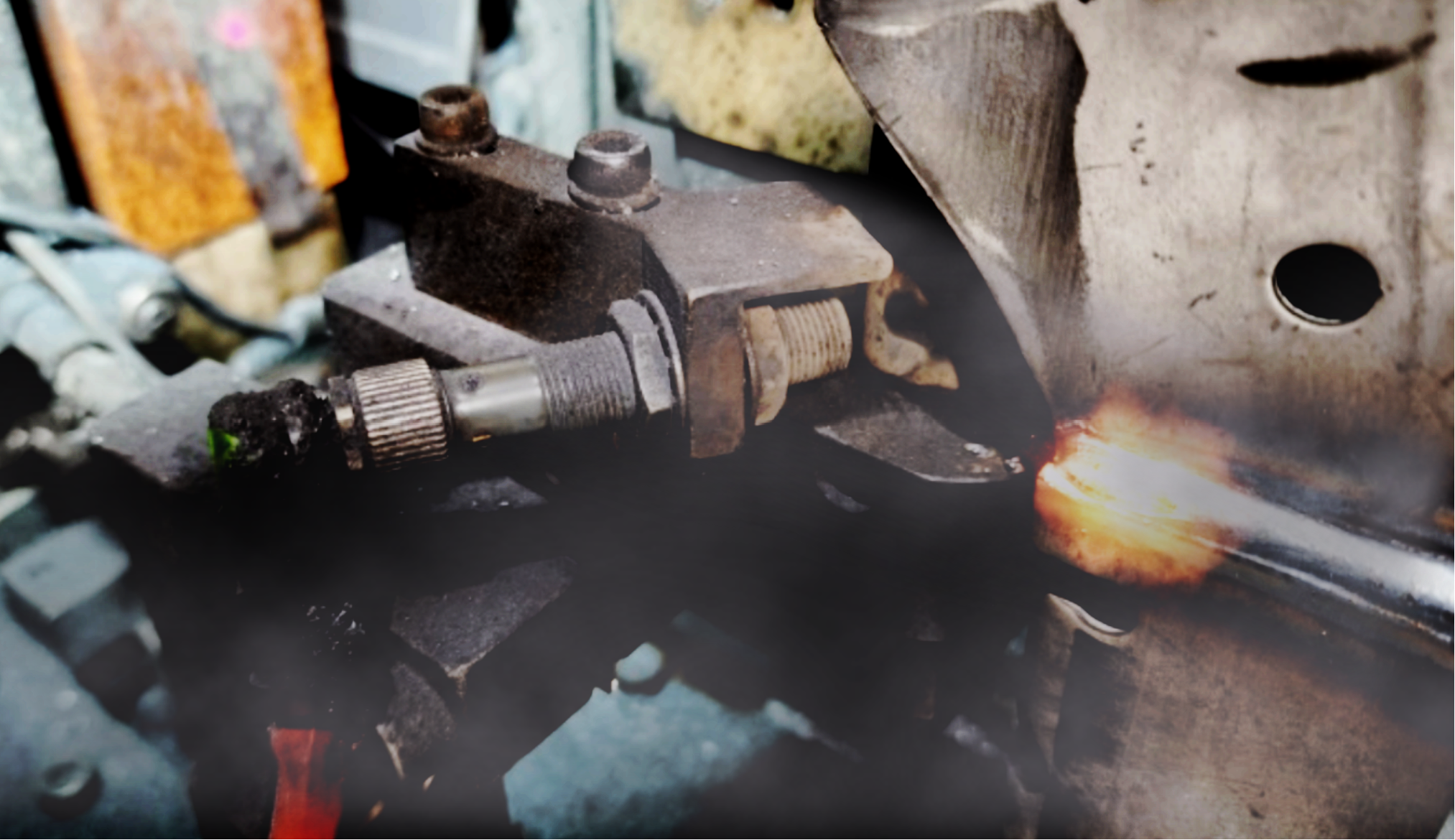 October 22 2023 · Steve CoulterSensing Hot TargetsMany plants use our WSI-1206 in high temperature locations - in close proximity to the weld and radiated heat. This sensor, as with the entire Z-PROX line is well-suited for this application, not just because of its ACTIVSTONE coated 304 stainless face, but because of the high-temperature internals, which resist liquification and allow reliable sensing through high cycles of extreme burst temperatures (we test at >1000°).
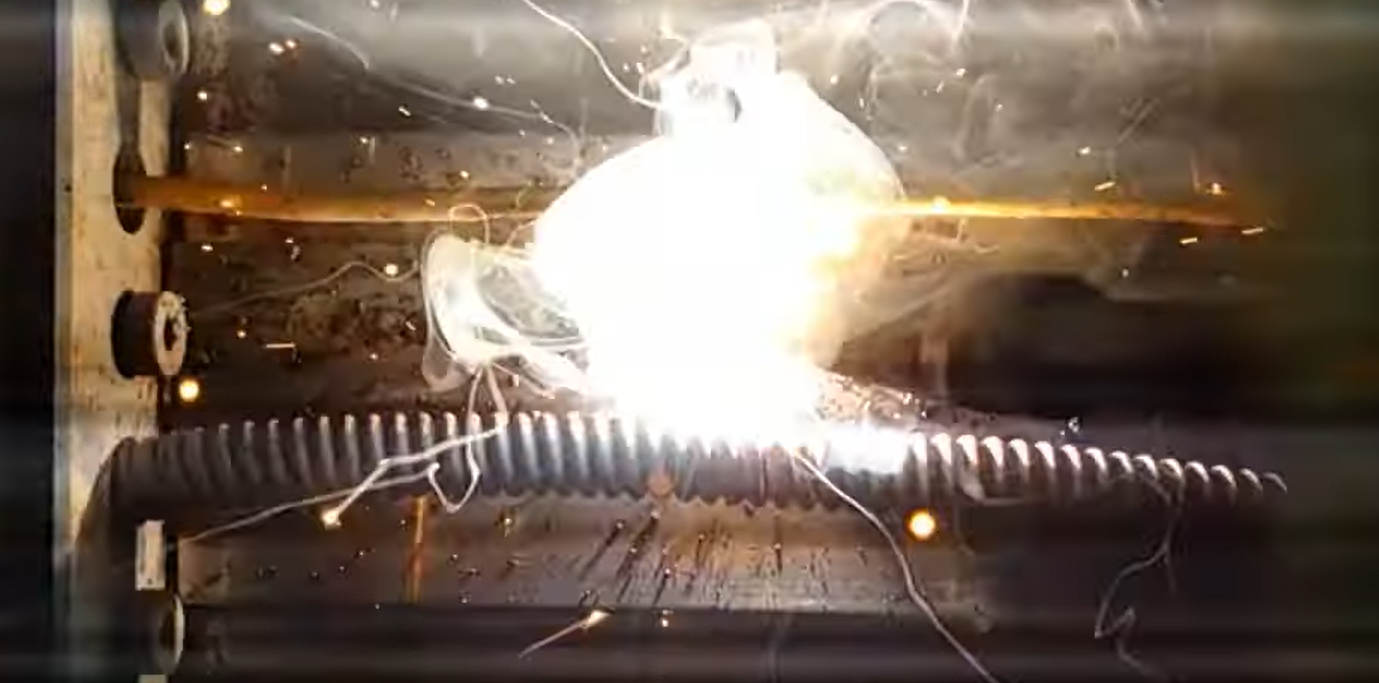 October 11 2023 · Jim RyanCable Protection in Harsh Factory EnvironmentsWelding and stamping facilities use ACTIVFLEX cable protection to protect cables and hoses from damage by heat, weld slag, impact, and abrasion.
Just how much protection can be seen in the video below - a side-by-side comparison of a protected vs. unprotected standard M12 cable when subjected to intense heat.
Also, there is no need to detach your existing cables in order to install ACTIVFLEX. It is pre-slit, and slips over your cables and hoses with the aid of an insertion tool (included). Speed of installation is key to applying onto existing lines, where getting in and out fast is critical. The video below shows the installation in seconds.
ACTIVFLEX video:
more footage of ACTIVFLEX in action here .
ACTIVFLEX was specifically designed with weld cells in mind, but it is also used in stamping applications, providing excellent abrasion resistance.
 October 04 2023 · Steve CoulterCan you sense THROUGH metal?A unique sensing function of the WSI-IP30 is the ability to project THROUGH various thicknesses of stainless plate to detect a variety of metal targets - see video below.
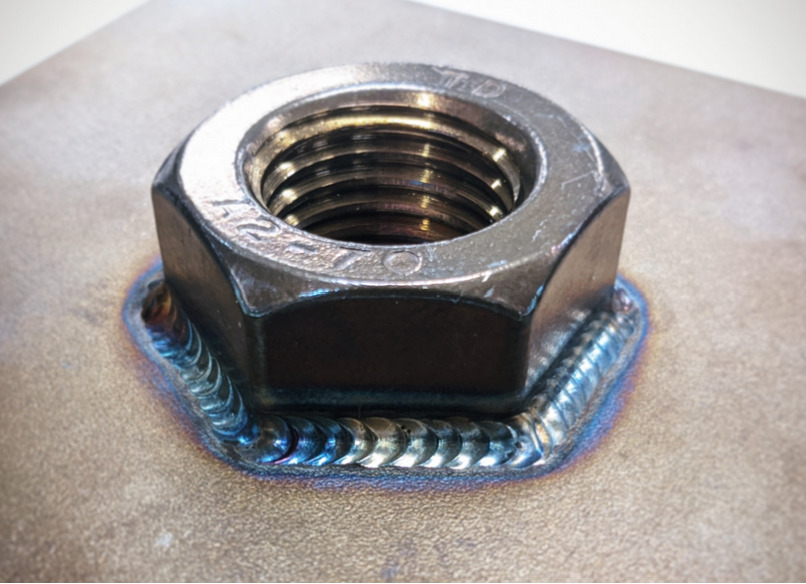
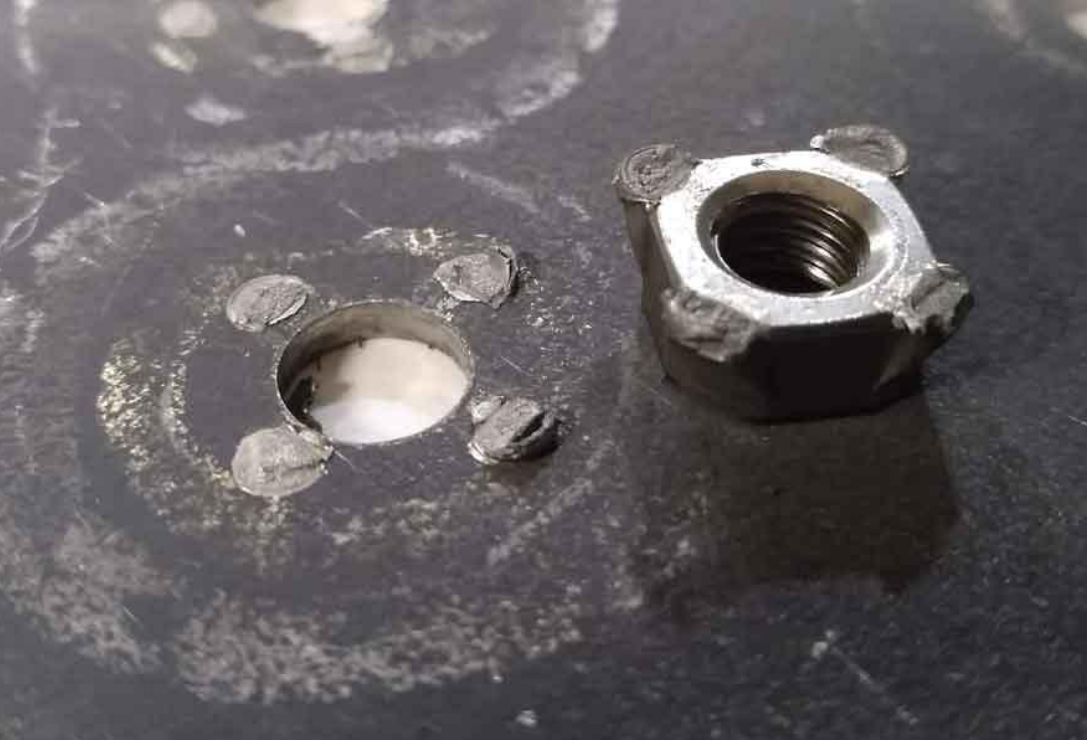 September 30 2023 · Jim RyanNut Detection Challenge Pt. 1Sensing a nut with an induc tive prox is a challenge when the nut is fastened or clamped behind a metal sheet. How can I sense the nut and not sense the sheet metal, since the prox sees the metal sheet first and then doesn't care about the nut?
And to make matters worse, the thicker the sheet, and the farther away the nut is - the greater the sensing challenge becomes! Take this example: 1/2" nut through a 9/16" hole in 1/4" steel plate.
ONE SOLUTION
Under-substrate detection is a non-intrusive sensing method, where the prox is positioned facing the hole in the metal sheet and "looks" though the substrate to detect the nut on the other side. In this case we need to used a 18mm programmable inductive, and establish 2 sensing widows.
 September 30 2023 · Jim RyanNut Detection, Part 2Today we have through-substrate detection. Part 1 is here .
In this case we have a 5 mm prox operating as a probe, poking through a hole to side sense the nut. The video below uses the same application detail:
1/2" nut
9/16" hole
1/4" steel plate
The inductive proximity sensor is not a programmable prox like the one you saw in Part 1 . No programming is required. Here's how it works:
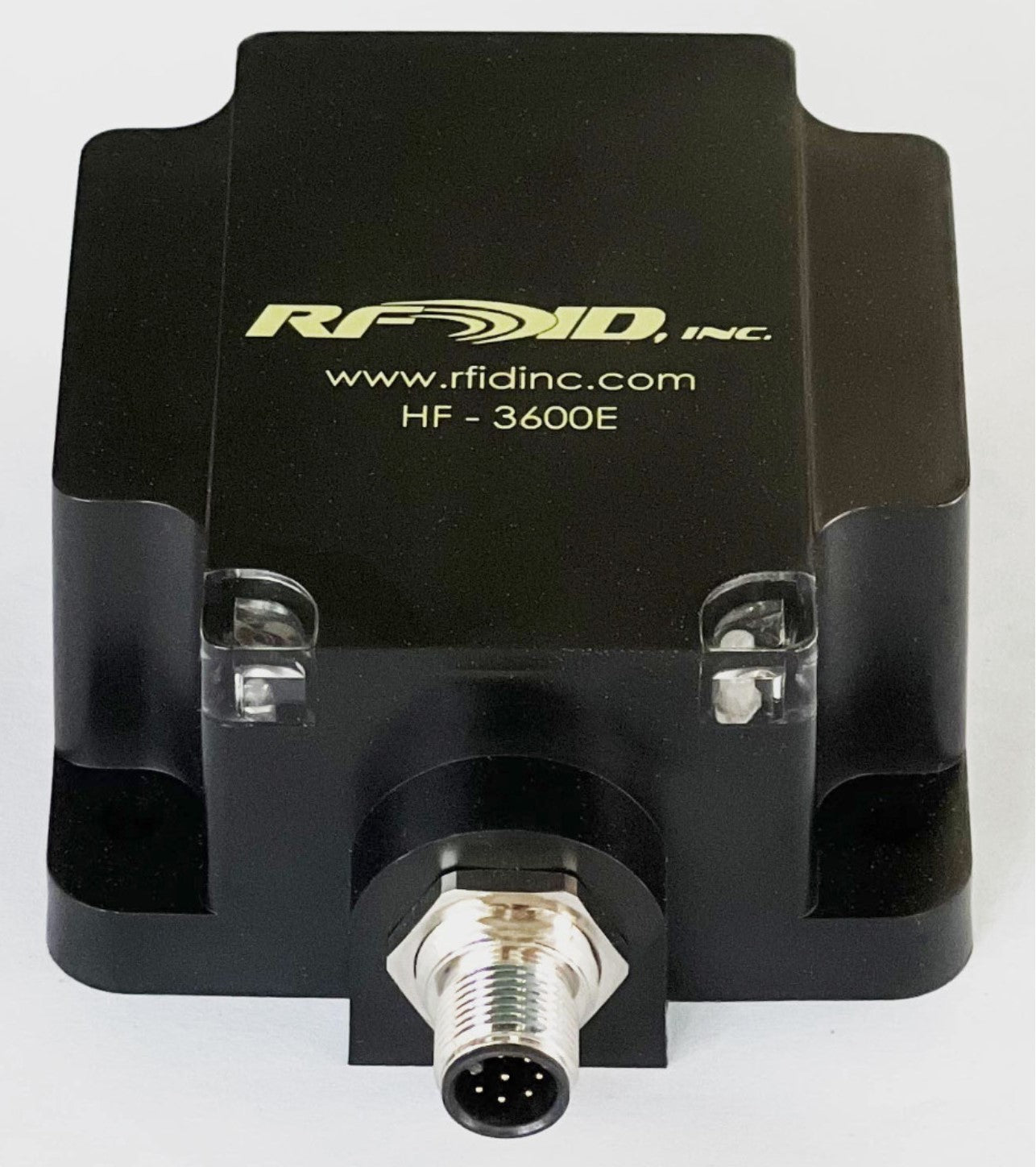 September 22 2023 · Steve CoulterRFID comes to Weld DynamixHigh Temperature, Metal Mount and Weldable RFID tags - able to be coated with ACTIVSTONE SX for spatter resistance in applications such as Fixture ID, Tool Changes and Pallet Tracking.
Weld Dynamix has a comprehensive frequency offering including 125khz, 13.56mhz and UHF. And support all common network protocols.
 September 21 2023 · Steve Coulter"Is my design good design?" And 10 Pinciples by Dieter Rams" Is my design good design? " this is the question Dieter Rams asked himself about his designs, which are now famously influential . Its a question I find myself asking about my own designs, and looking more into Rams I discovered a gold mine in his " 10 Principles of Good Design ".
 September 20 2023 · Steve CoulterFabtech 2023 - Best Tradeshow Ever!Believe me when I say that Fabtech 2023 was crazy full, and the excitement never let up - Day one was awesome. Day 2 awesomer. Day 3 was twice as awesome as Day 2. Day 4, although it was the last day, was still awesome, but not quite as awesome as Day 1. Met with many customers and potential new customers - and visited some of the great displays with functional machines and cool technologies!
 September 20 2023 · Jim RyanEliminate Your Weld Cell DowntimeSince you clicked on this post, you probably have downtime headaches in your weld cells. Like all of our customers, you are extremely skeptical and have a Missouri-style "Show me!" attitude. You're already thinking of clicking away because this post is sounding like it's probably baloney already. I love that about our customers! They don't believe in BS.
This post brings videos that "show you". When you're through, you still won't believe me, but you'll pick up the phone and bring me to your shop because you'll think, "Hmm. Let's get this guy in to show me . Have him bring some samples we can install. He can give our new maintenance techs training on how proxes work while he's here."
Okay? Here goes.
I came across this 2013 article at Shop Metalworking Technology magazine by Thomas Jaeger: 7 Ways to Robotic Welding Cost Savings . It's fine, but once again I hang my head in sadness at how incomplete it is, lacking one special thing. If Jaeger only knew about Weld Dynamix weld cell components! All the man-hours lost over the years! For no good reason! But how was he to know? Weld Dynamix was just in the womb when Jaeger wrote it, the womb being our R & D shop. Here is what Jaeger's article is missing:
The most important way to cut weld cell costs is to use components so tough that they don't cause you downtime by wearing out and needing to be replaced. Downtime is money.
At FABTECH last week, I found myself saying to everyone who came to see our booth, "This booth is all about eliminating downtime. That's what Weld Dynamix does. We eliminate downtime."
Weld Dynamix components are ultra tough. Impact, heat, abrasion, and weld spatter find themselves in a hopeless predicament when they attempt to wear out our
Proxes
Cables
Mounts
Cable protection
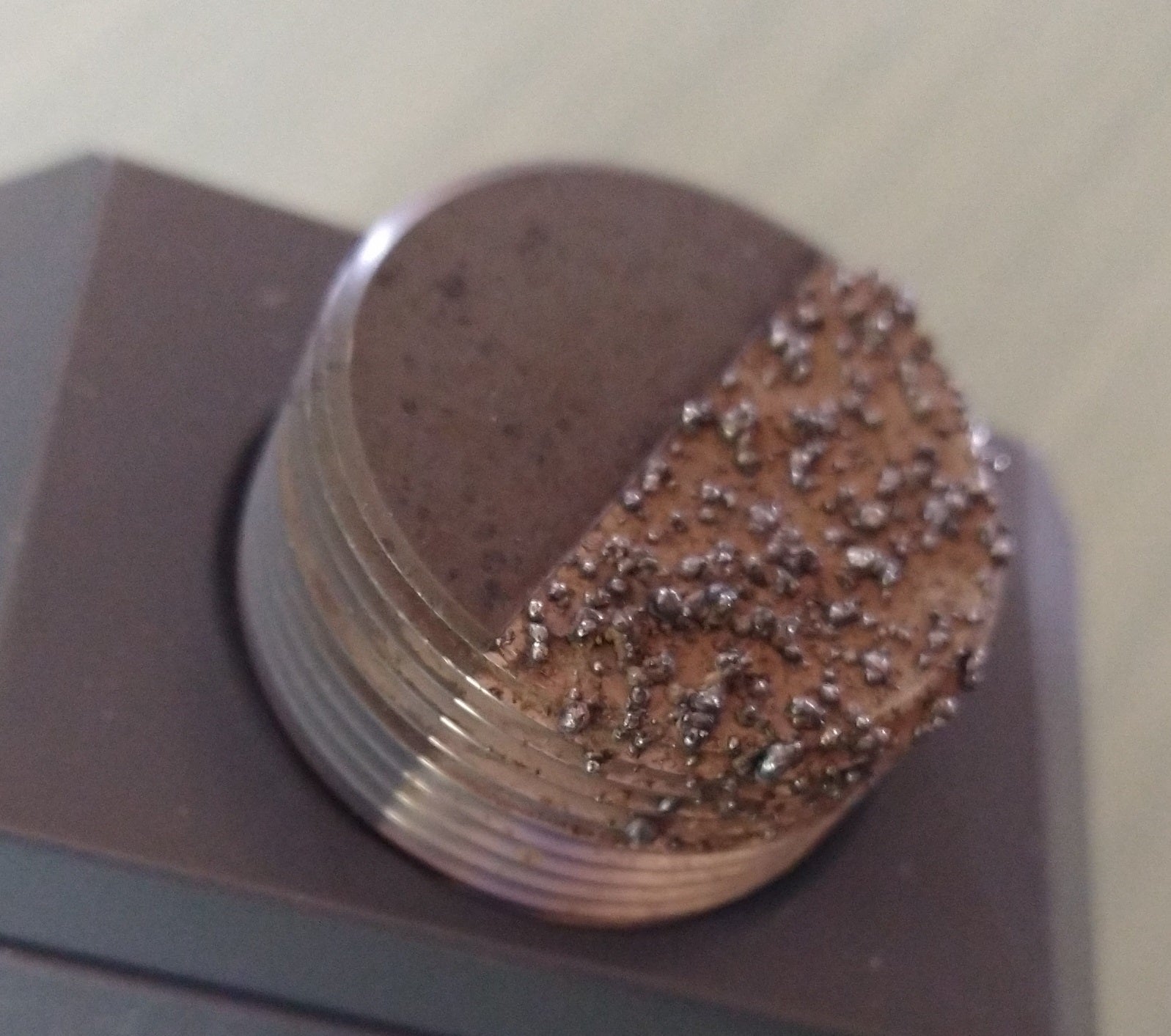
For example, our proxes. See the half-coated prox in the photo heading up this post? Half shows what happens if you don't use our coated proxes: downtime due to weld spatter. The other half of the prox is coated and it shows you sailing along with no downtime. Even the threads on the coated side are just fine. At our booth at FABTECH last week, an executive of a very prominent welding company asked me, "Uh huh. How often does it need a recoat?" I said, "There is no recoat." He looked at me stunned. "One and done. It ships to you coated and that's it," I said. After seeing all our components at our booth he said, "I can't believe it! How come I haven't heard of Weld Dynamix?!" Well, we're a startup, buddy. We've been around less than five years. But thousands of our components are on floors now and they're doing great. No complaints yet!
Please settle in to a few short, eye-opening videos to see for yourself. This is a total of about five minutes of video. Afterwards, you'll probably want to pick up the phone and call us to come see you.
Let's make a meal of these videos, starting with the appetizer, which may be our best product of all.
1. 20 seconds: Appetizer. Our cable protection. It slips on in five seconds without your having to disconnect the cable at either end. Cable damage headache gone. Enjoy!
2. Three minutes. The main course. A montage of our components taking abuse as if it were nothing. You'll say, "Wait a sec" and want to watch this one twice. If you have any question about what is happening in this video, just call me.
3. Dessert. You can skip dessert unless you want to see more about our Mini Flat Pack inductive proximity sensor standing up to the abuse you saw in the montage. A minute and a half. This sensor is our toughest product. The coating makes it immune to abrasion and weld spatter. Here we see the sensor wearing out a steel brush over the course of the week at FABTECH , and it functions just fine.
4. Coffee. You will click this video off after about thirty seconds, saying "I've seen enough. Get these guys on the phone. Let's bring them in to see if this is legit." The video is a little over two minutes long. It's our Cube 40 mount for 30 mm proxes. It comes in both steel and nonmetallic models. The nonmetallic model is inductively transparent and withstands 1,000 strikes by a four-pound sledge hammer in the video. You can flush-mount unshielded proxes with it!
You have presses? Stamping? Our proxes make double-blank detection possible, and our Mini Flat Pack is good for places where it will get whacked. So, we aren't just for weld cells. We have weldable RFID tags, too. Think of matching machine components with tags that are welded on, so that you can flag any mismatch to avoid more downtime.
One last thing. Jaeger mentioned the importance of training your techs as a way of reducing costs. That's right . That's why we offer free 1-hour training to your techs when we're in your shop. The training is 100% hands-on, so that your techs see how to wire proxes and how proxes see metal.
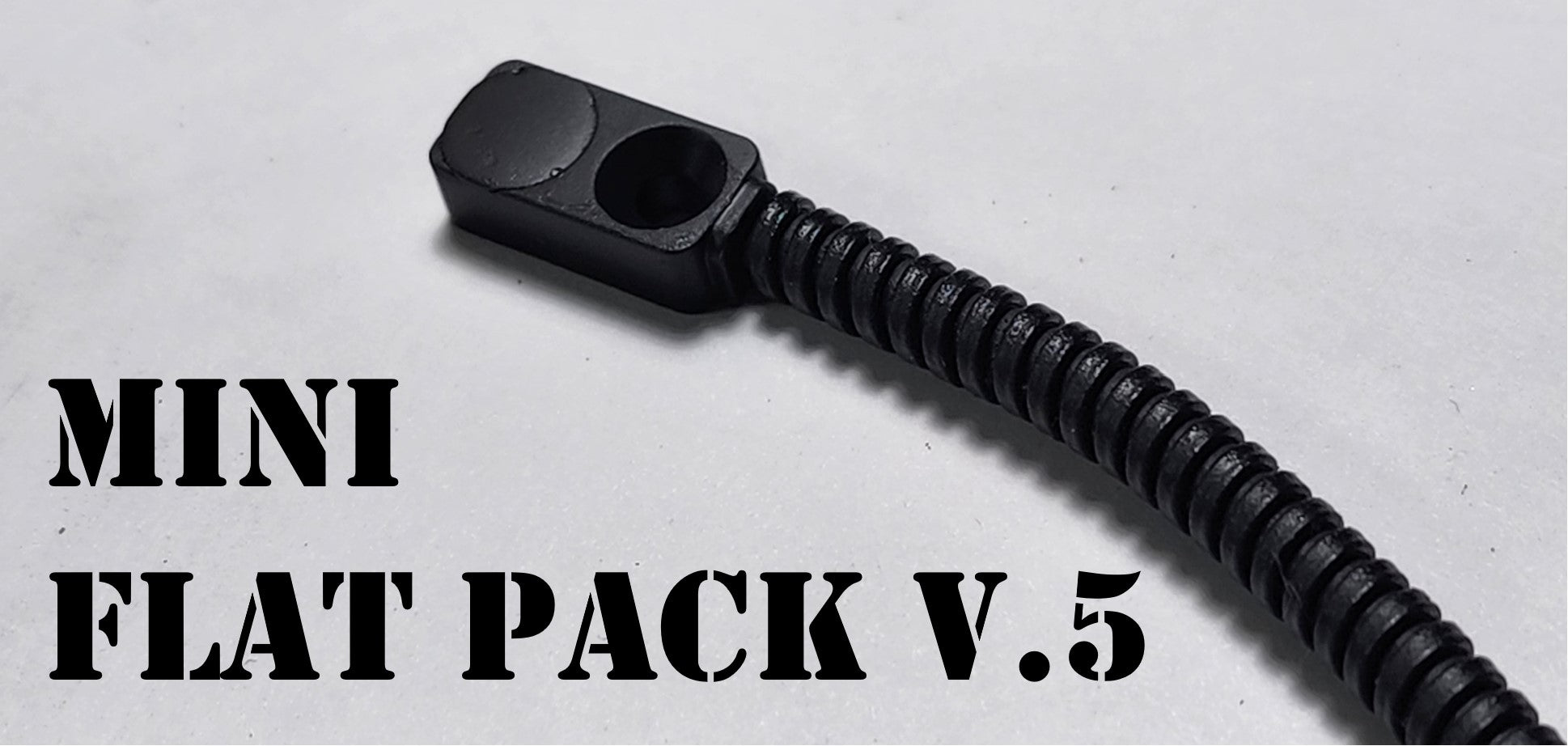 September 19 2023 · Steve CoulterMINI FLAT PACK DEBUT - FABTECH CHICAGO 2023Our MINI FLAT PACK is being installed pilot projects throughout the US - to test for durability in high heat, impact and abrasion applications - applications where failure occurs regularly. So far, so good!
We know that the ACTIVSTONE sensing face is highly resistant to abrasion - but we wanted to demonstrate that feature at FABTECH in Chicago.
On the weeks leading up to the show, I built a tabletop drilling machine - applying 20lbs of force with a 1/8" HSS drill bit to the center of the MINI FLAT PACK sensing face - but after a day of testing the machine, I decided it was just too boring - no penetration into the sensing face was evident. I needed something more destructive and with more action!
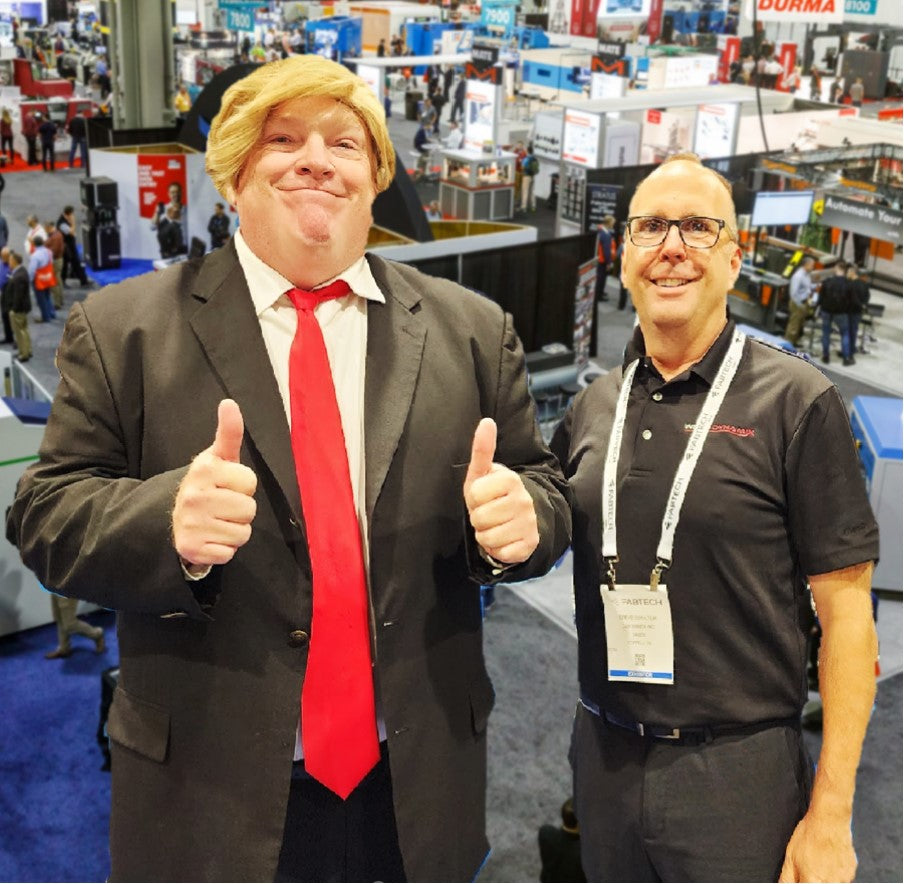 September 18 2023 · Steve CoulterThe Donald at Fabtech?Interesting things happen at a big show like Fabtech Chicago - a very popular guest (or rather a facsimile thereof) was making rounds to "bring back manufacturing to the US" - not a bad message, and great delivery - but the wig needed some work!
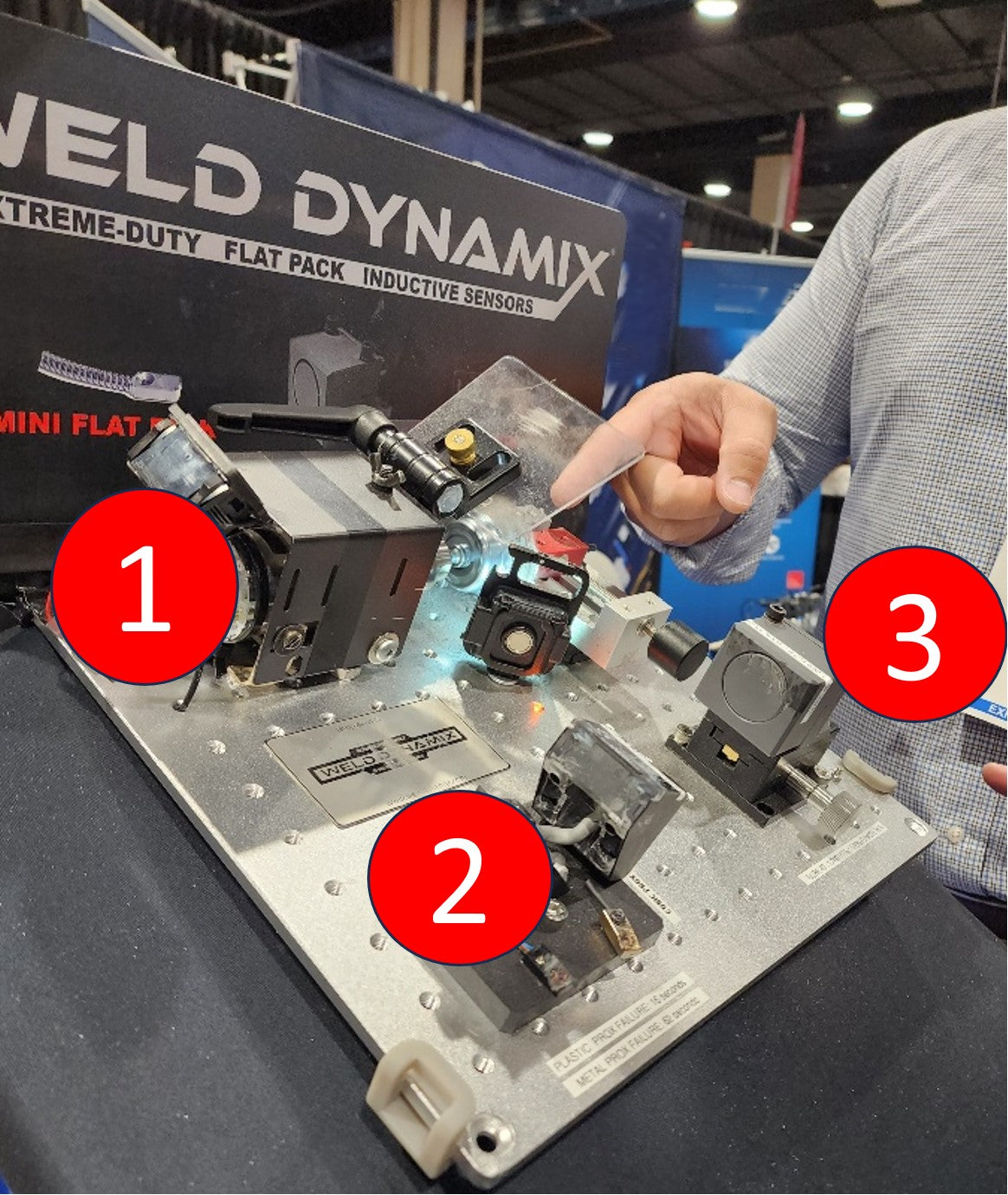 September 13 2023 · Steve CoulterWeld Dynamix at FABTECHFabtech this year is really big - looks to me like the attendance is back to the high levels - but now manufacturers are pulling out all the stops to present machinery and technology like never before!
Below - customers really were captivated by Weld Dynamix' FLAT PACKS DISPLAY which includes 1) our rotary abrasion machine proving out the durability of our mini flat pack, 2) a display of historical flat pack failures - 3) our CUBE 40 which was hit over 1000 times by a 4lb sledgehammer - but still functions perfectly!
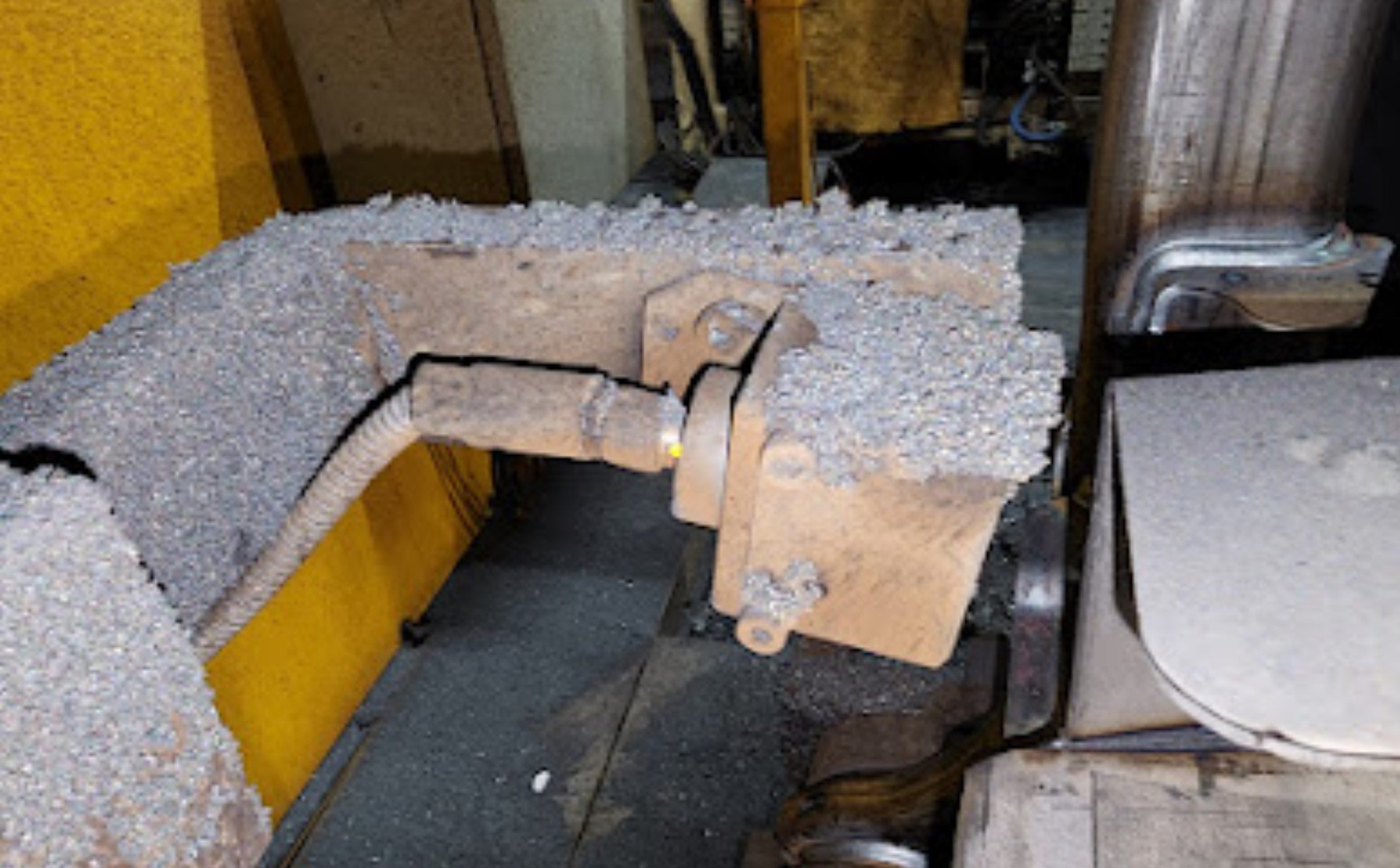 September 05 2023 · Steve CoulterLong Distance Edge Detection - in a harsh environment)See this customer pic of the CUBE 40 in a heavy slag environment - it replaced a 40mm plastic cube sensor that was failing at regular intervals. This combination worked:
Weld Dynamix CUBE 40 mount with 30mm sensor
SUPERGRADE Cable with ACTIVFLEX installed
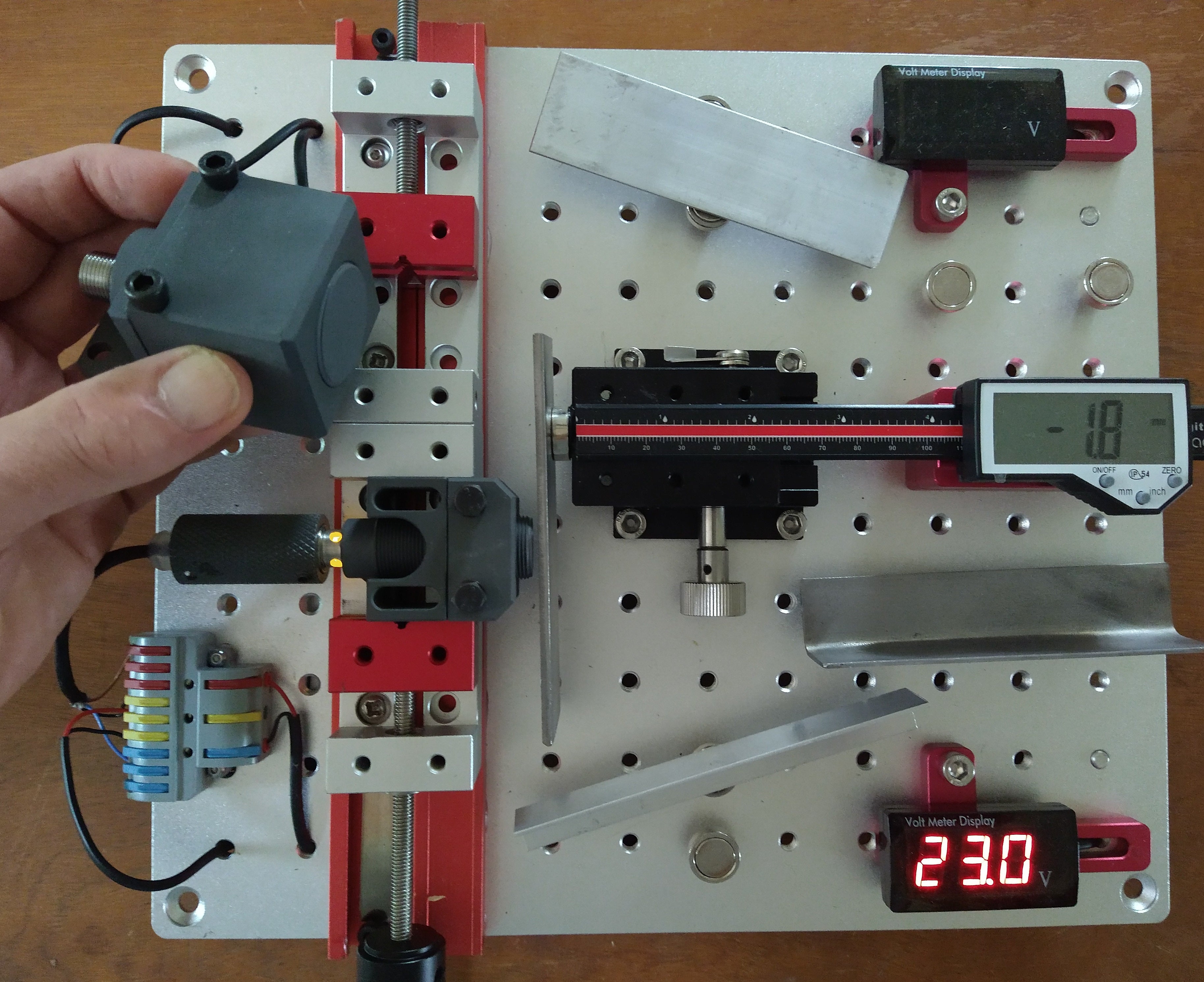 August 31 2023 · Steve CoulterFABTECH 2023! Free Training at Our Booth!We'll be at FABTECH 2023 , September 11-14, at booth B29093. Walk up for some free hands-on training with sensors, cables, and mounts. Use our SENSING TRAINER BOARD for a few minutes or as long as you want. It's a lot of fun! Here's what it looks like:
 August 31 2023 · Steve CoulterWhy is SENSOR TRAINING important?Why does your team need training on sensors? What kind of training?
Sensor Training that Works!
Often, maintenance techs learn about sensors on-the-job (or rather in the weld cell) when the cell is down and clock running - in this case the most expedient action might be just to replace the failed sensor with the same part #. That usually takes care of the problem...at least for a while.
But understanding the behind-the-scenes factors causing that failure could possibly help avoid failure altogether. We think it is more than possible, it's probable, since we do this with many plants from inductive sensing knowledge (particularly in weld cells) gained over 20 years.
HANDS-ON TRAINING! Having the chance to learn inductive proximity sensors in a hands-on setting with multiple scenarios, various materials, different diameters and sensing patterns arms the team with knowledge that can eliminate failures as they come.
Failure Solved! Example
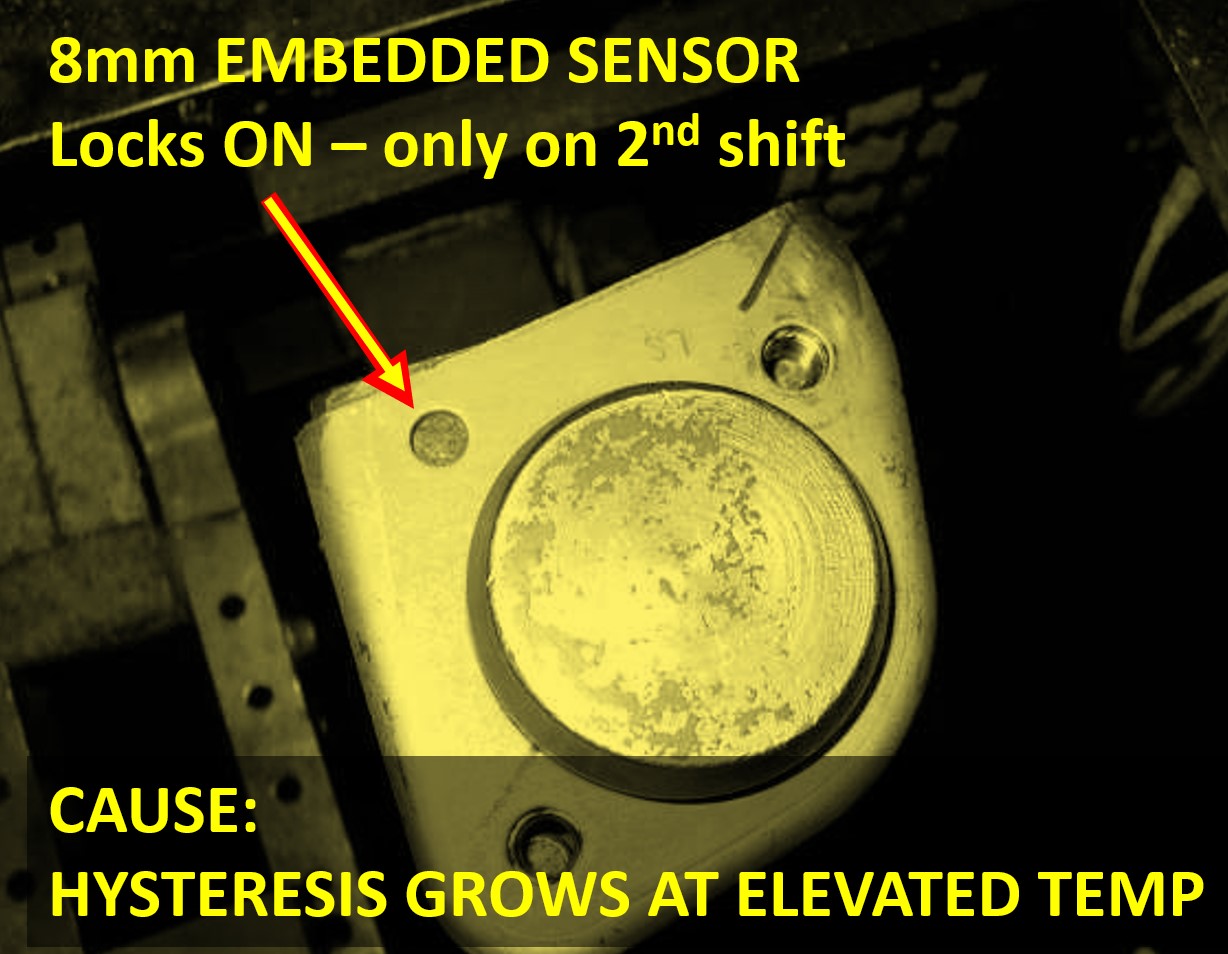
A cell started running really hot during 2nd shift - locking the sensor to an "ON" state even when no part was placed in the fixture. Why? The sensing range increase due to temperature to the point it sensed the surrounding steel it was mounted in. In this case, replacing the sensor worked - until 7pm the next evening when it happened again - then it was replaced and worked, then this happened again and again, like clockwork.
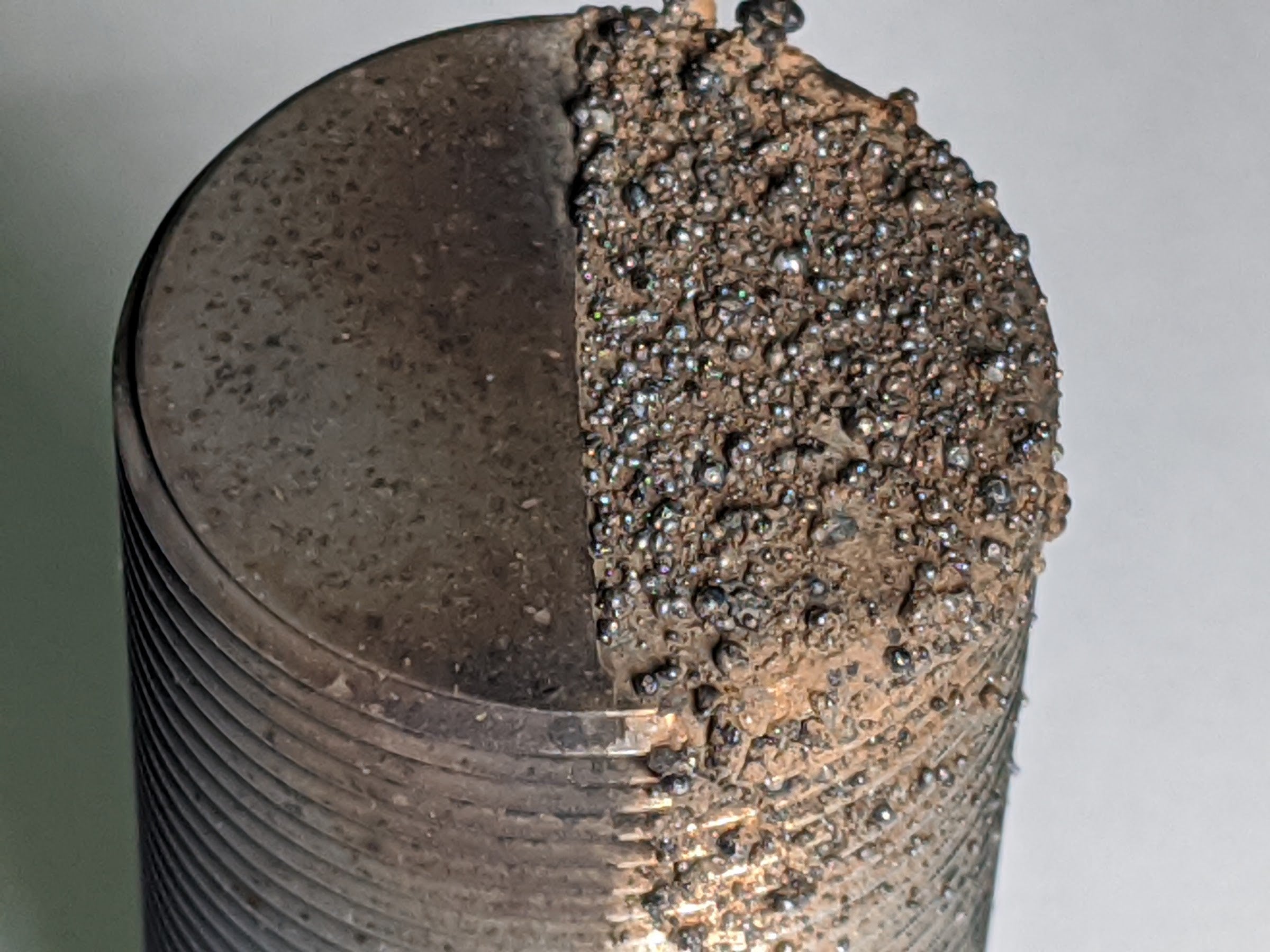 August 28 2023 · Jim RyanWhy Use Metal-Faced Sensors that Fail? Use the Ones that Don't!What is that picture above? Its the Weld Dynamix WSI stainless-faced inductive proximity sensor - half coated with ACTIVSTONE - an extreme-duty coating protecting it from weld slag and spatter. You can see the weld spatter likes the unprotected metal half (right), but doesn't like the coated half (left) - more on that picture later.
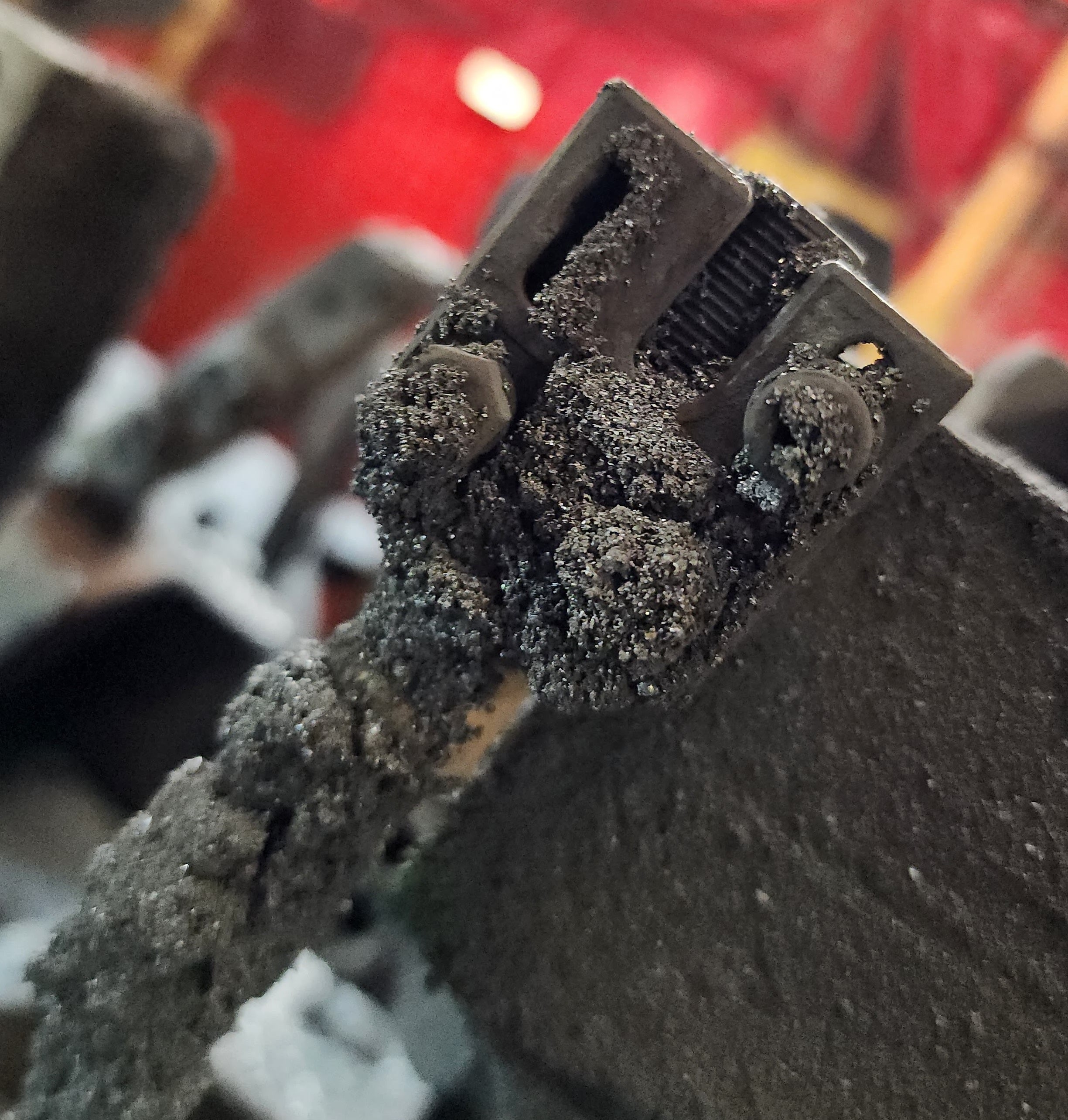
If your brand of coated metal faced sensors end up needing replacement like these below - what is the reason for the failure? First, note how the weld slag stuck on their faces.
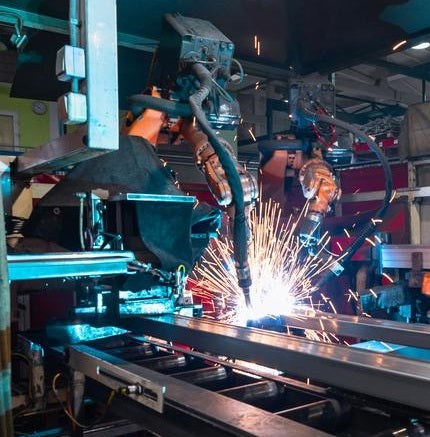 August 25 2023 · Jim Ryan"Yeah, I Need to Automate My Welding Process": A RoundupIf it has become clear to you that you really should automate your welding process, you have lots of thinking to do before moving forward with implementation. Here is some help from the pros: a roundup of posts by people who know all about weld cells, including at the end some on pitfalls that you'll want to avoid. This is a long post, so get a cup of coffee.
I'll give you a quick summary of each of the fifteen articles, but do find time later to click through and read them all. They will get you started with the right concepts and might save you a ton of money and frustration. We'll start from a very high level (how to automate in general) and gradually move down to the very close-up view (e.g., which welding wire to choose).
The View from 30,000 Feet: Automating a Manufacturing Process in General
Wauseon Machine and Manufacturing has advice for managers on how to automate a process in Industrial Equipment News. First off, you should be clear on the benefits of automation for your business and how it can be implemented for your specific goals. But in general, automating will, according to Wauseon, offer reduced operating costs, improved throughput, profitability growth, and low-risk (more predictable) ROI. Next, you should conduct an automation audit for your business's specific position and needs, because whether and how to automate are not answered by a simple algorithm or formula. Also, you should hire a system integrator, instead of going it alone without the help of an experienced pro. Finally, assemble a team of three leaders to manage profit and loss, operations, and engineering, respectively. Finally, develop a clear plan for your specific needs, taking into account relevant laws and regulations.
DIY Robotics has advice similar to Wauseon's, but there are interesting differences. Additional benefits of automation that you should become clear about include improved safety and quality control and better scalability. Also, DIY points out certain points you should bear in mind when looking at your specific needs in order to decide what and how to automate: bottlenecks and rate limits, labor intensity, task complexity, and safety issues. DIY suggests you get your data analytics team to help here. DIY adds that your workforce should be engaged in the implementation, and the implementation should be tested and tuned before deployment and monitored afterward.
Tim Garnett has further high-level advice over at Automation World. This time the advice comes from the perspective of a system integrator. He advises that the whole workday of the employees be looked at for places where they are obliged to do non-productive tasks (such as clicking through a dozen HMIs). Garnett offers lots of details about how to shift this work over to a more productive scheme. (When you read his article, you'll be able to tell that he's a systems engineer.)
The View from 10,000 Feet: Automating a Welding Process in General
Okay, now let's look at welding in specific. Just to get the ball rolling, Yaskawa has initial thoughts . Here again we see an emphasis on what needs, in specific, your manufacturing process in particular has and how automation can address them. Yaskawa even has an app for that (linked to in the article.)
Pemamek offers an introductory discussion covering the benefits of automating your weld process and also the reasons you might still be hesitating over whether to automate , such as concerns over whether your particular process even can be automated, the difficulty of programming, and the lengthy ROI time.
Jeff Henderson helps analyze your needs in a post at the Abicor Binzel Blog. He wants you to go through the following thought process:
How many parts do I produce regularly and how repeatable is my operation? Are you looking to knock out large, timely projects with more robust parts or small one-time parts that you do for a customer once a year? Automation is best at repeating the same parts over and over with reliability and precision.
Henderson has some key details on weld joint repeatability on which turn the question of whether you should automate at all. Click on over and see for yourself, but in brief, the idea is that if you cannot put the parts repeatably exactly where the robot assumes they will be, automating may not be right for your system.
At THG Automation, Zenobia Weigel has additional tips : do not overcomplicate the implementation, look at which of your processes are necessary and which are not, and think about the effect of automation on your staff. Weigel mainly has cobots in mind here.
At Mechanical Farm, Dhruv Mehta points out what might be obvious to some but needs to be said:
There are several types of robotic welding machines such as Gas Metal Arc Welding, Gas Tungsten Arc Welding, Thin Gauge Arc Welding, Plasma welding, Laser Hybrid Welding etc. The first step in determining the right robotic welding machine is understanding the workflow involved in making the end product and how a robotic welder can integrate into that workflow.
He also notes something you might not have thought about: What about your upstream processes? Are they going to be ready to produce the parts that the robot needs quickly enough for it? He says, "Making sure your upstream processes are in line with the performance of the robot is crucial as failing to do so is lowering the efficiency of the robot and ultimately annulling the investment."
Up Close: Weld Cell Implementation
A few articles take an even closer look at implementation. Codinter has a lengthy overview that introduces you to the basic ideas of automated welding (parts of the robot and weld cell (arm, power source, controller, JIG, sensors, etc.), "cobot", some history of robotic welding, etc. The article also notes several important points, such as the need to train some on your staff to program the controller and dealing with team members who may fear that they are being replaced by a machine. Chiming in with Weigel's idea of keeping implementation simple, the article notes that if you have complex welding processes and simple, repetitive ones, consider automating the latter and letting the humans keep control of the former. Codinter has more implementation tips - consider heat generation from the weld cells and consider division of labor among the robots so that their programs don't need to be frequently switched - so click on over and take a look.
Robotiq's Catherine Bernier has a two-part series on getting started that looks even closer at weld cell components. Part 1 is here and part 2 is here . (These posts, though still helpful, are ten years old, so unfortunately the videos in them are no longer available.)
Warnings in Advance from the Pros
You know that feeling "I wish I had considered a few things more carefully before I started down this path," right? Two articles offer assistance in this area. Bob Rochelle over at The Welder has eight mistakes that he can help you to avoid , such as eliminating your key weld personnel, underestimating the payload reach you will soon enough need, and expecting too much from the robots. Miller Electric Mfg's web site has an article that will help you keep in mind four crucial ideas : keeping implementation simple (we keep hearing that from these pros, don't we?), getting buy-in and input from staff, determining part mix and fit-up, and analyzing your workflow.
Details about Weld Cells
When you're ready to zoom in to the even finer details, take a look at a couple of valuable articles from Tregaskiss. One is here and the other is here . These concern factors such as choosing welding wire, reducing cable wear, and establishing reliable TCP connections.
Finally
Two points. First, if you can, attend FABTECH next month (September 2023 - or if you're reading this long after that, go to the next FABTECH.) If you're short on time, just spend one day at the four-day convention. Go to as many booths as you can, especially those of the aforementioned integrators, but also the exhibits of the weld cell manufacturers. Talk, look, chat, get business cards, etc.
And please do stop by our booth. We will give you a few minutes of very fun hands-on training with sensors and cables. You'll walk away knowing exactly how your robot will see the metal it welds. Also, when you implement your weld cell, choose components that won't burn out. That means choose Weld Dynamix sensors , cables, cable protection , and mounts . You will never know the frustration that has plagued weld cell teams for decades: burnt-out components, down time, reduced production. Our sensors, cables, and mounts are coated with ACTIVSTONE so that they are impervious to weld spatter. Our mounts are robust (to put it mildly) and our sensors' performance is excellent. Don't forget about our cable protection tubing. If you're reading this after already purchased and installed vulnerable cables in your weld cell, then cover them with our cable protection. Also, definitely cover your ethernet cable with it, as well as any other cable in your cell that isn't coated with ACTIVSTONE .
UPDATE: Robots.com chimes in with a few tips on building a weld cell .
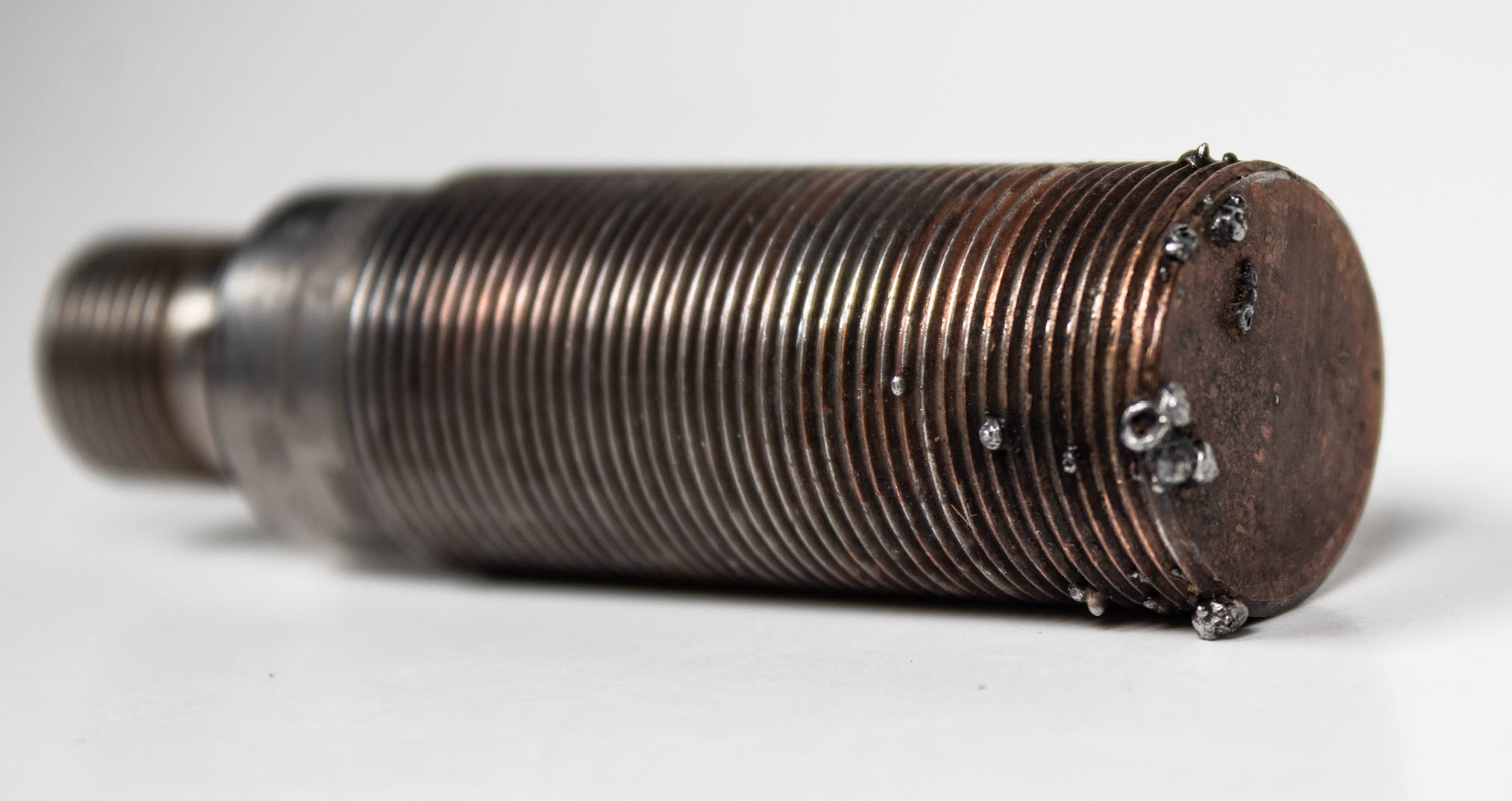 August 25 2023 · Steve CoulterWe copper-plated an inductive prox - guess what happened...Years ago, someone (who shall remain nameless) told me that copper plating would solve a huge problem in the industry - preventing weld slag and spatter buildup on sensors. That got me thinking:
Could an Inductive Proximity Sensor be electroplated with copper? Would the sensor still work? Could the copper plating prevent molten splash and slag from fusing onto it? Why was copper plating not used by sensor manufacturers? Was this guy a kook?
See the results and judge for yourself:
AFTER PLATING A STAINLESS STEEL SENSOR:
 August 22 2023 · Jim RyanNeed to Use an Unshielded Prox for Long Range Detection? We Have Your Mount!We also have your sensor. But let's focus on the mount.
You need long-range detection, so you've selected a 30 mm unshielded prox. You want to mount it so that it's protected and because of the tight space where it needs to be located.
It would be great to mount the prox flush, instead of having it stick out like a sore thumb that's going to keep getting whacked by the abuse delivered by your weld cell.
If only there were a mount for your 30 mm prox that was
Inductively transparent, like it wasn't even there as far as your prox could tell
Tough: able to withstand all the collisions, heat, and spatter that a weld cell delivers to it.
Weld Dynamix has your mount: the "Cube 40":
 August 16 2023 · Jim RyanMetal Stiffness vs StrengthNice post on stiffness and strength in metal fabrication over at Eziil's blog. If you are interested in industrial metallurgy and all things associated with it, you should have Eziil's blog in your bookmarks.
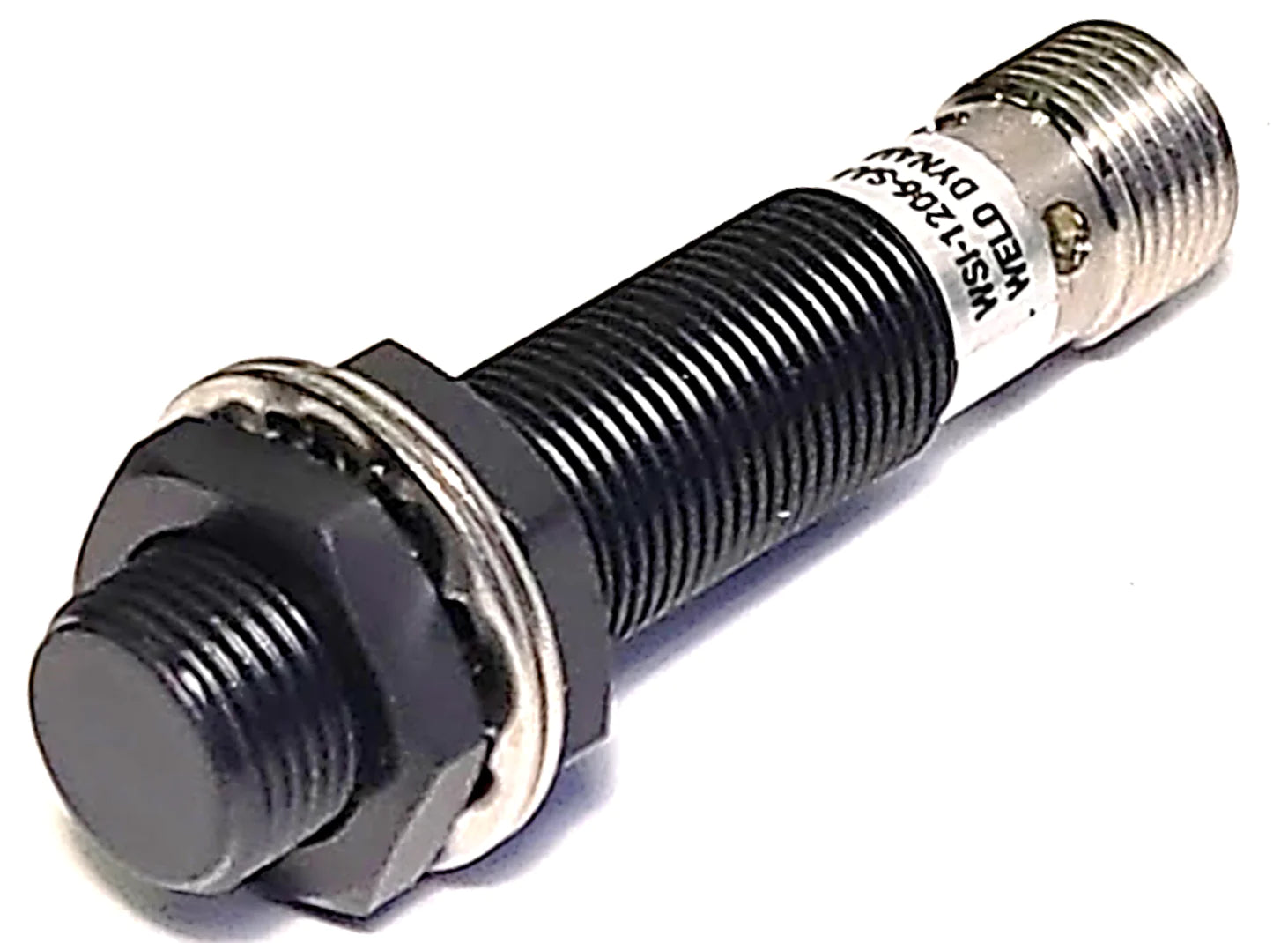 August 15 2023 · Jim RyanHow Inductive Proximity Sensors Work - Part 2Part 1 is here . It was a long post on the concepts. Today we take a look at one other thing about proxes: hysteresis.
Hysteresis in Inductive Proximity Sensors: A Good Thing Inductive proximity sensors are designed to have hysteresis because in their context it is a good thing! Here we're speaking of sensors designed to measure proximity (distance) of a target from the sensing face - in which the output is affected actually by two preset distances:
the ON POINT - the distance, on the target approach, where the sensor begins switching the output transistor. Referred to as the sensor's RANGE .
and the OFF POINT - the distance, on target retreat, where the sensor stops switching the output transistor.
The distance between ON and OFF is HYSTERESIS, indicated as a % of the sensor's range.
 August 12 2023 · Steve CoulterNEW PRODUCT ANNOUNCEMENT - ACTIVFLEX TUBULAR - TEALACTIVFLEX TUBULAR - TEAL COLOR
FOR PROTECTION OF NETWORK CABLES ACTIVFLEX TUBULAR - TEAL COLOR
FOR PROTECTION OF NETWORK CABLES:
ABRASION
HEAT
WELD SLAG & SPATTER
 August 09 2023 · Jim RyanTIG WeldingA couple of articles on how to solve your TIG welding issues with new tech for TIG and, you guessed it, cobots .
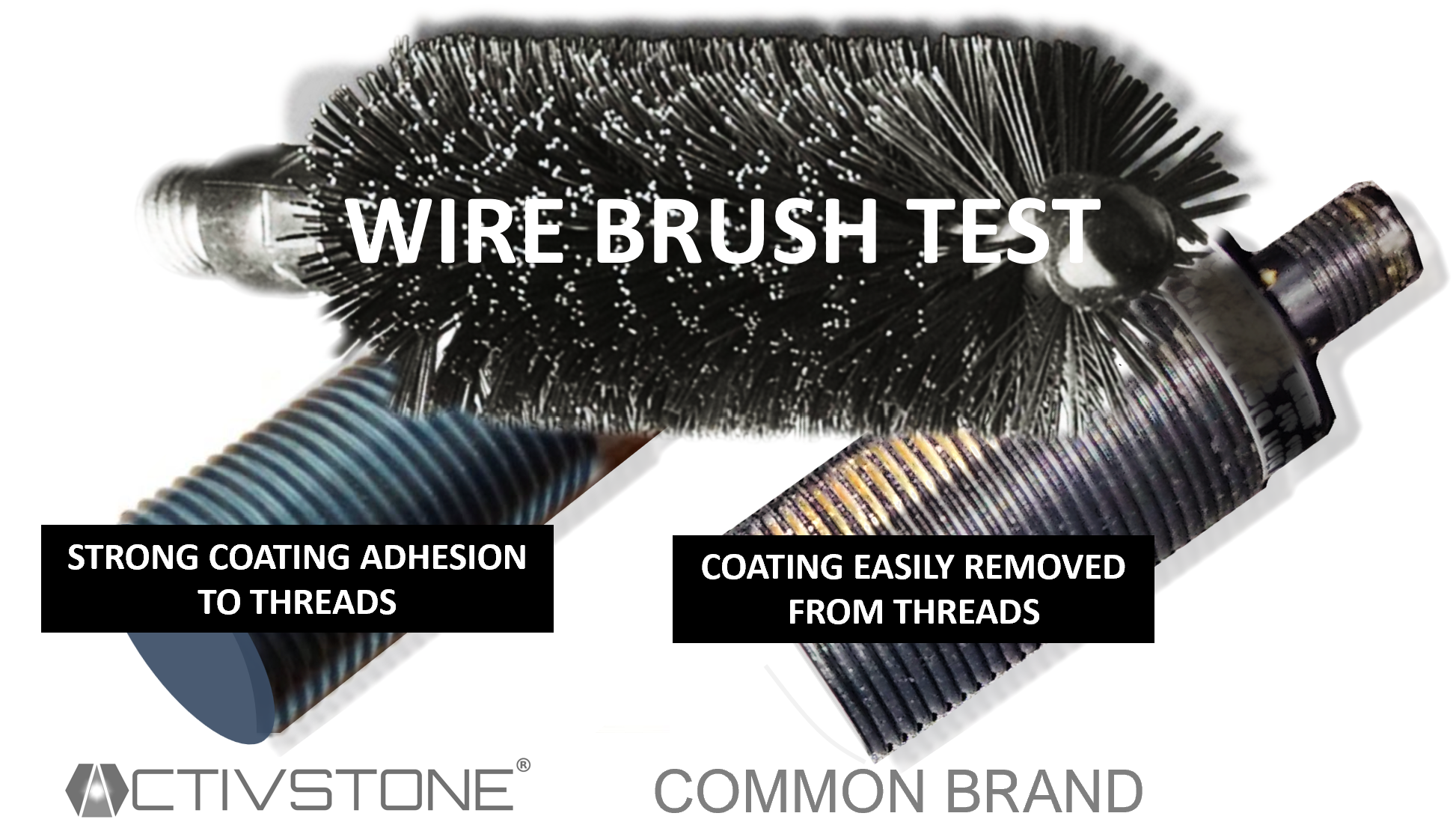 August 05 2023 · Steve CoulterWhy We Focused On The ThreadsOf course the face of the sensor needs to be protected from weld spatter - since one fused molten BB on the face could quickly latch the sensor "on" and render it useless.
But in the development of ACTIVSTONE, as we looked further into historical sensor failures in weld cells, another key issue surfaced - latched spatter globs on the threads! Since weld spatter likes to fuse onto hard edges - the multiple sharp outer edges of the threads make a perfect attachment point! This was probably the most difficult problem we had to solve - a coating that could stick to the threads yet still allow the nuts to spin on!
 August 05 2023 · Jim RyanBring Us to Your Shop to Train Your Staff in Proxes and WiringWe will come to you and give your techs one hour of totally hands-on training on proxes, wiring, mounts, cabling, and cable protection. The cost is low. Whatever you're thinking, it's lower than that.
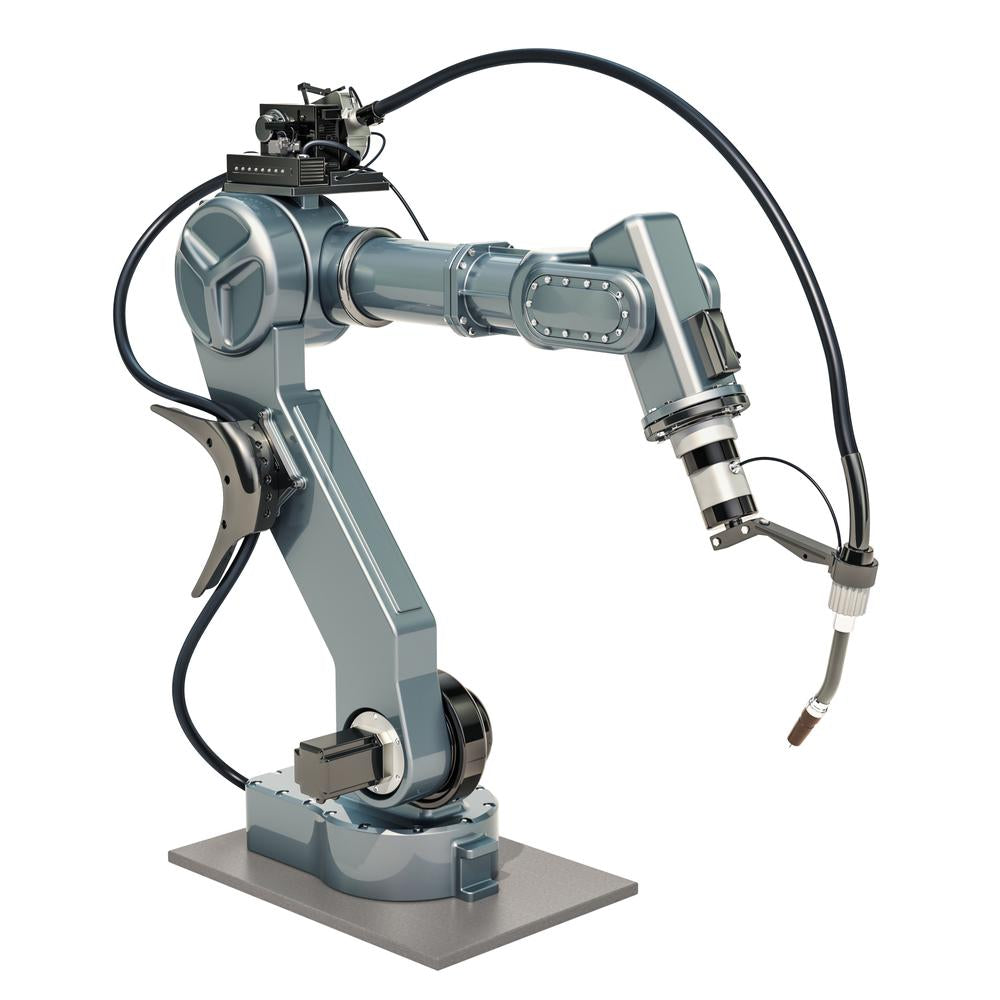 August 04 2023 · Jim RyanThe Power of the ArmRoboDK takes a look at the importance of industrial robotic arms as industrial automation moves toward Industry 4.0. Robots.com also takes a look at robot arms .
 August 04 2023 · Jim RyanGalvanized Steel and Galvannealed SteelEziil compares the two .
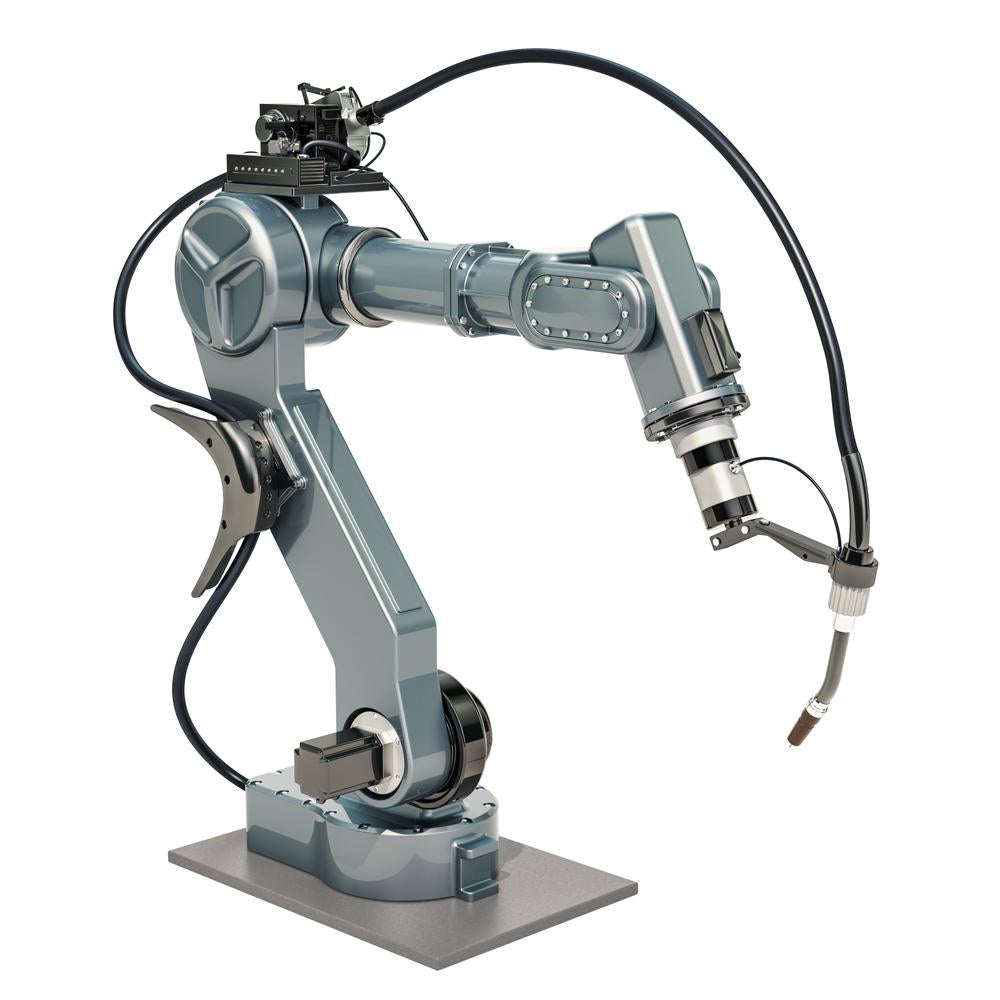 August 04 2023 · Jim RyanTIG CobotMatt Bush reports on yet another success with cobots , this time with TIG welding.
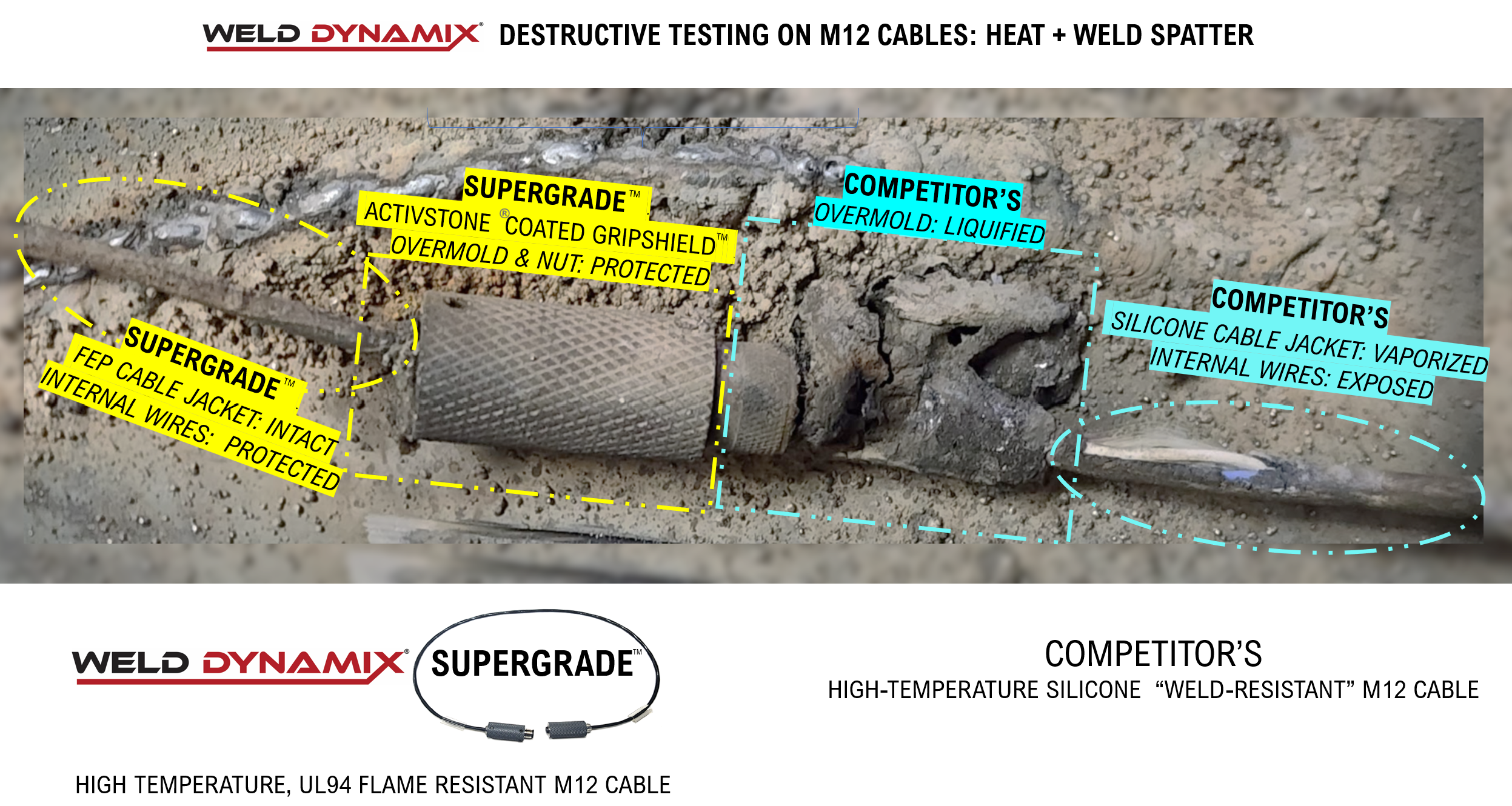 August 04 2023 · Steve CoulterM12 cable that can survive in weld cellsSee this comparison of destructive testing - we connected a competitor's cable (right) to our SUPERGRADE cable (left) and ran several beads of high-spatter welds along the entire length of the cable - a total of 2 minutes duration. Burst heat >1000 degrees.
SUPERGRADE survived quite well - constructed with a high-temperature 5-wire shielded FEP jacketed cable, and the overmold is completely bunkered inside the dual purpose ACTIVSTONE-coated GRIPSHIELD, which functions both as an overmold shield and as the actual nut - machined out of stainless steel with high-grip knurling - this is a Weld Dynamix feature designed to extend cable life in welding environments.
The results you can see below: hi res photo here
 August 04 2023 · Jim RyanHow Inductive Proximity Sensors Work - Part 1Proxes detect metals. They ignore non-metals. How? Let's get into it.
This will be a short series of posts. This first post presents the basic physics that we need to understand proxes. It's a little bit of the electricity and magnetism that you would learn in the second semester of a college physics course. Let's break it into seven numbered chunks. (All images below, except where noted, taken from Samuel J. Ling, et al, University Physics Volume 2 , OpenStax, 2021.) 1. Consider an electric current going in a straight line in metal, such as a current running along a straight wire. The current causes a magnetic field to circulate around the wire. It just does. It's an amazing basic fact of physics. The result is like what we see in the following diagram, with "I" indicating the current and "B" the magnetic field. The magnetic field runs in circles around the wire.
 August 03 2023 · Jim RyanCobots, Robots...Mat Dirjish has more on choosing between cobot and robot and Paul Richards has an article on what to look for in a cobot .
 August 03 2023 · Jim RyanCustomer Uses Our Mount and Sensor CleverlyWhat do you do when you are replacing a proximity sensor and mount that just kept failing but the location is one where the better components you are about to install require the mounting holes be in a different location? You turn the mount around and see if the mount works backwards! In this case, the customer had great success.
We took this photo at the customer's plant this week. The sensor and mount have been working for months now without issue.
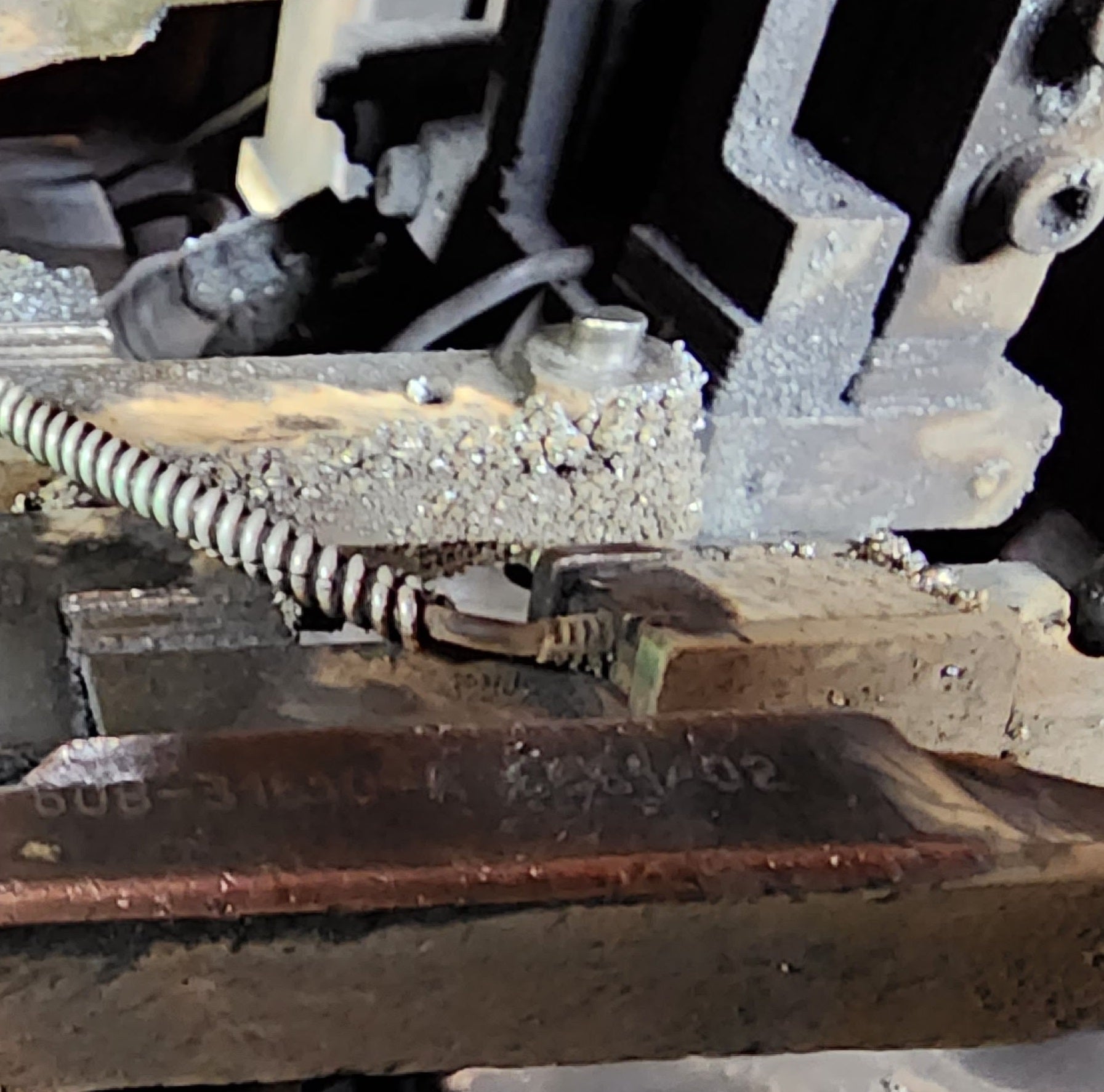 July 31 2023 · Jim RyanIn Weld Cells Today - Our Flat Pack Takes AbuseAs I mentioned, we are on tour of several factories this week, talking with several teams about their weld cells. Here are a couple of shots of our "flat pack" sensor and the abuse it takes, as well as our cable protection.
In the first one, the flat back is facing upwards in the center right of the photo. Our ACTIVFLEX cable protection is in use. Both are bearing up after nine months. Our sensor replaced a sensor of another brand which failed every month, requiring replacement. The Weld Dynamix sensor stopped all failures in this location. Now that they have our sensor in place, they have eliminated a lot of downtime. One and done.
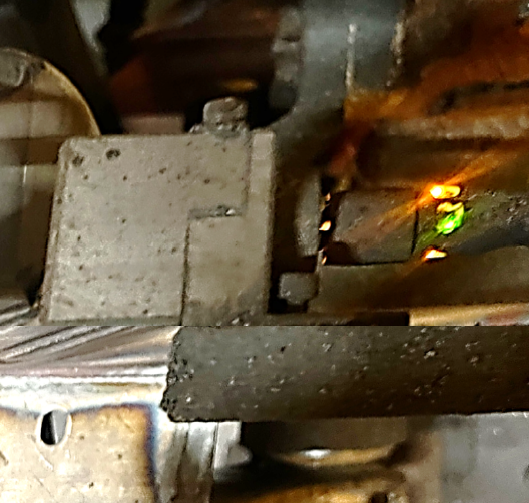
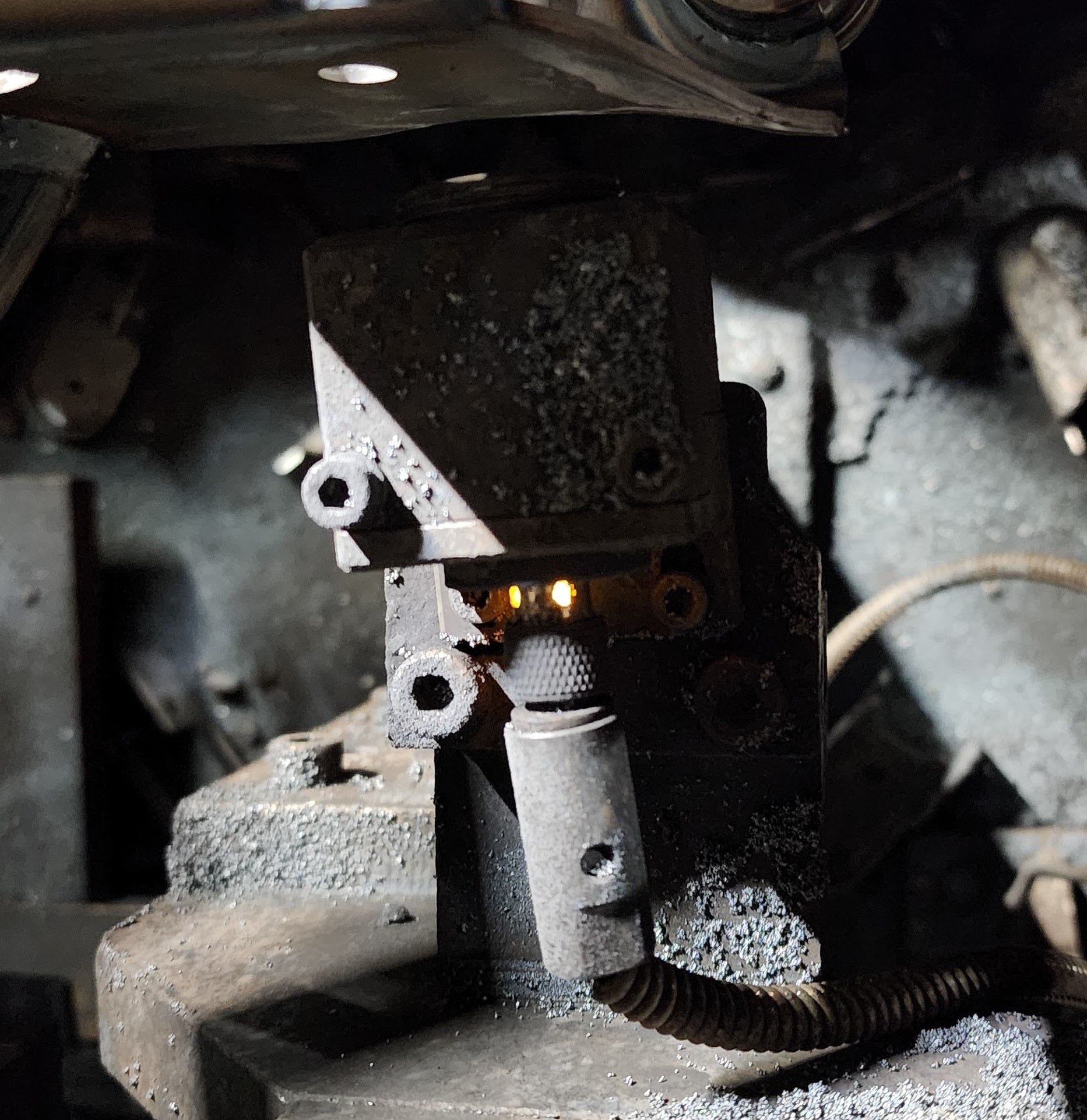 July 31 2023 · Jim RyanIn Weld Cells Today - Our 40 mm Cube Mount, 30M Sensor, and Cable ProtectionHere is a nice shot from above of our sensor, cube mount, and cable protection, holding up nicely under the duress of weld slag after two months. The sensor's LED lights are on, indicating, correctly, that the piece of metal is in view. The mechanics were very happy about this, but from our perspective, two months is only getting warmed up. We think in terms of years. Our components are designed for extreme duty.
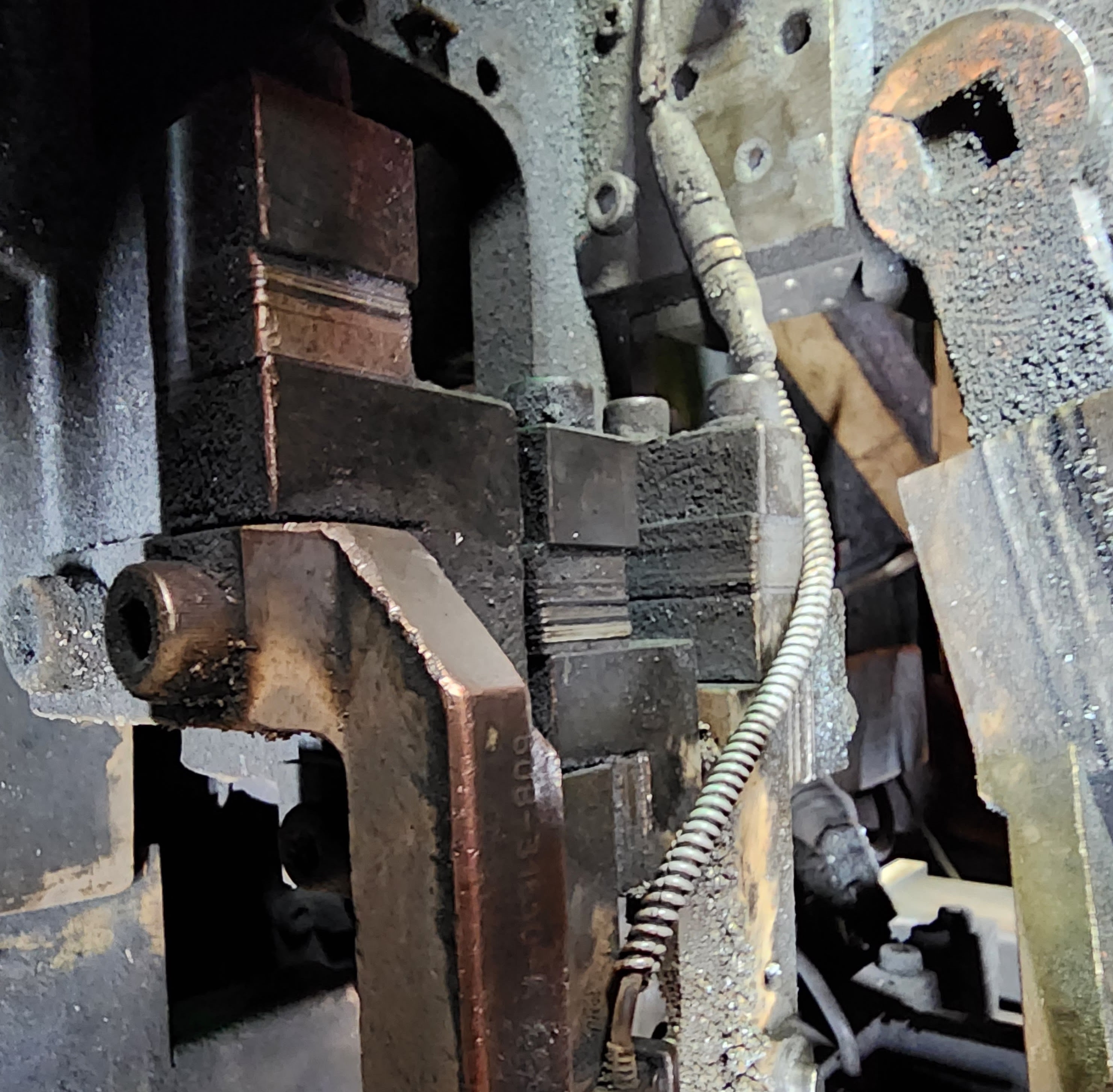 July 31 2023 · Jim RyanIn Weld Cells Today - Our ACTIVFLEX Cable ProtectionHere is our cable protection after nine months in a weld cell. Now, we can't stop gravity from having weld slag stick around. But watch what happens in the video. The weld slag was not causing any failure at all. Just slide our ACTIVFLEX cable protection onto your cables without having to disconnect them at either end. It takes about ten seconds. Do it everywhere that you have vulnerable cables. Protect them.
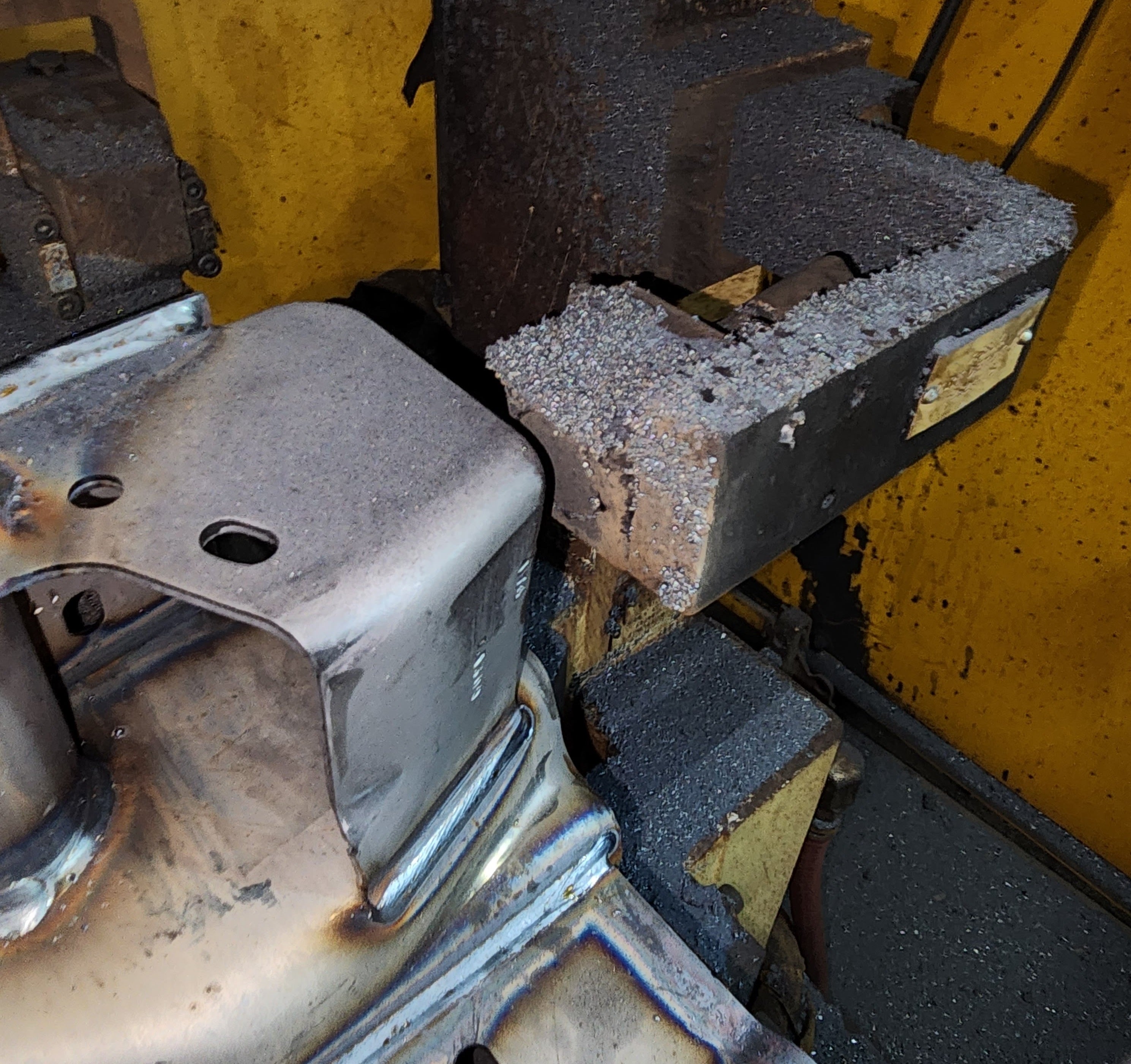 July 31 2023 · Jim RyanIn Weld Cells Today - Edge Detection Under Extreme ConditionsHere are six photos of one of our ACTIVSTONE coated sensors, in an ACTIVSTONE coated mount, along with our ACTIVFLEX cable protection.The sensor detects the edge of the part. This is an important capability in weld cells.
We can't stop the weld slag from staying on top of the components due to gravity - but even so, their performance is intact. They just keep working. In this case, the Weld Dynamix sensor replaced a frequently failing cube sensor. The Weld Dynamix sensor has operated for two months and keeps running. The customer is delighted. No more frustrating downtime for frequent sensor replacement and cable replacement.
- July 28 2023 · Jim RyanReshoring and AutomationLouis Columbus notes that automation might help cut reshoring costs . "Automation is a proven strategy for reducing labor costs and increasing shop floor productivity, making nearshoring and reshoring a profitable alternative to offshoring." He lists inventory management, productivity, speed and consistency, and more as areas where automation provides the needed support. As the experience of Stanley in reshoring Cratsman to Ft. Worth shows, the reshoring-via-automation process is not without its pitfalls .
 July 28 2023 · Jim RyanSemiautomatic WeldingWe noted before Austin Weber's article on semiautomatic welding as a good option for some shops. It bears remention. "Fully automated welding is often not ideal for every application." Indeed . But "semiautomated welding systems are a great option, because they can double the output of a skilled manual welder while still maintaining a high level of control." Weber notes preconfigured cells and cobots. Perhaps weld sequencing should also be noted.
 July 28 2023 · Jim RyanMiller on Optimizing Weld Cells: Secondary Circuit WearIt's great to see good, in-depth articles on weld cells from vendors, such as the one by Tregaskiss on reducing downtime that we discusses a week ago , and this one by Miller is another example.
In the article, Miller points out that the cabling and circuitry running from the power source to the weld joint - the secondary circuit - gets worn by weld slag and heat and, degrading, suffers voltage drops that can ruin welds. The article gives astute advice about how to design the cell to minimize the secondary circuit's vulnerability - positioning the leads out of the path of the return current, minimizing the cables' length, and so forth. Miller also recommends a secondary compensation circuit that will measure and report voltage drops in the primary and then compensate for those drops.
This is all very well and good. But it makes me think of someone who is going to suffer a terrible blow and is advised to brace himself for it and purchase a first aid kit in advance. It's good advice, but how about a helmet? How about armor?
Weld Dynamix offers cables and cable protection that do not let weld slag cause any problem at all? Our cables are coated by ACTIVSTONE , so weld slag slides off. For cables that you can't or don't have time to replace with ours, there is our ACTIVFLEX cable protection which installs in seconds over your existing cables without disconnecting them. All this keeps the sensor cables, ethernet cables, etc. protected so that they do not burn out. If ACTIVFLEX can fit in with your cell so that it can cover your secondary circuit cables, they would be protected, too.
 July 27 2023 · Jim RyanThe Difficulties of Aerospace WeldingAlthough it deals with human welders, Andrew Pfaller's article on the problems of aerospace welding is interesting. Pfaller mentions a few solutions, including technological ones that inform the welder and prevent errors, which makes me wonder whether weld sequencing or cobots might also help.
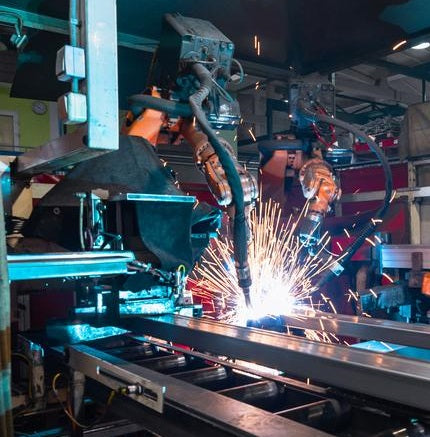 July 27 2023 · Jim RyanLaser Welding and AutomationKip Hanson takes a good look at laser welding, including automation: Leading with Light . Meanwhile, Opt Lasers is speaking of a " blue laser revolution ," saying " blue lasers excel in micro-welding copper [and] welding metals or plastics together ."
Emily Newton gives a general overview of lasers in manufacturing here .
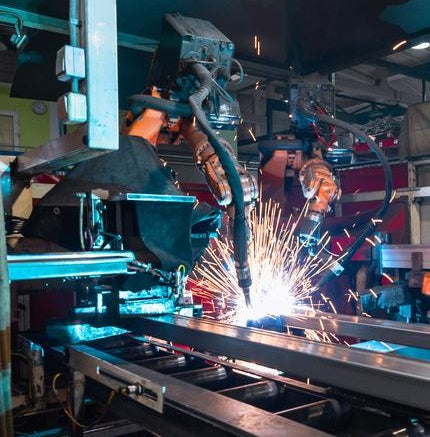 July 27 2023 · Jim RyanCutting Weld Cell CostsHere's a nice look at seven ways to cut weld cell costs . Add cost-saving peripherals, manage consumables, care for the MIG gun, etc.
Two things caught my eye:
1. "[S]olid mounts... can protect the robotic welding system investment, maximize its effectiveness and reduce costs." Weld Dynamix agrees. Our solid mounts protect proxes and, especially if the proxes are able to be flush-mounted, as Weld Dynamix proxes are, act as both a heat shield and heat sink for the sensors.
2. "Take advantage of training opportunities. Many robotic integrators offer training opportunities...." Indeed. Please bring us to your shop to train your weld cell personnel on how proxes work, how to protect cables, and how to mount sensors protectively. Training takes only one hour. The price? Low. Whatever you're guessing, it's lower than that.
Most importantly, Weld Dynamix proxes don't burn out. Nor do our cables or your cables if they are covered by our cable protection. They simply don't burn out. Now, that cuts costs!!
- July 26 2023 · Jim RyanRemove Noise from the Process?You should remove noise from your processes, right? Maybe not . "[T]here can be information in noise...."
- July 26 2023 · Jim RyanMagnetic Pulse Welding in Auto ManufacturingAssembly has a note on the technique . (Free subscription required.)
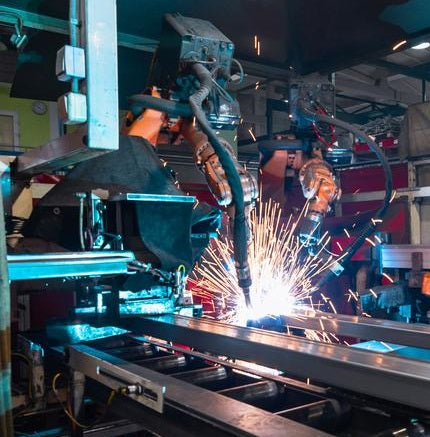 July 24 2023 · Jim RyanWeld Cell Preventive MaintenanceDetailed tips on this from Eric Walton at Fabricating & Metalworking, who focuses on the MIG gun. At the same site Andrew Marchand chimes in with details about maintaining the peripherals and accessories . (Walton raises the issue of wire cast and reamers. You can find more on those here and here , respectively.)
Overviews and gentle reminders are given here:
From the Tregaskiss blog, which also advises not to forget the MIG gun because welding robot maintenance isn't just for the robot .
Robots Done Right has a high-level list ...
...as does Robots.com .
Oxygen Service Company has a checklist .
Northline has a few tips .
General industrial robot maintenance overviews are given by SDC and Yaskawa .
If you're thinking, "Yeah, I think maybe I need to farm this out," then ICR can get you started thinking about this , and Robotiq advises on how to choose an external service .
However, the first step you should take is to use Weld Dynamix proxes , cables , and cable protection . They don't burn out. No more periodic replacement of those components in your weld cells. The proxes and cables are coated with ACTIVSTONE so weld spatter bounces off and away. The cable protection does the same thing where you don't have time to disconnect your current cables; just slip the protection on in a couple of seconds. Our robust prox mounts also reduce maintenance headaches.
- July 24 2023 · Jim RyanThe Difficult Path to Lights-Out ManufacturingRehanna Begg has thoughts .
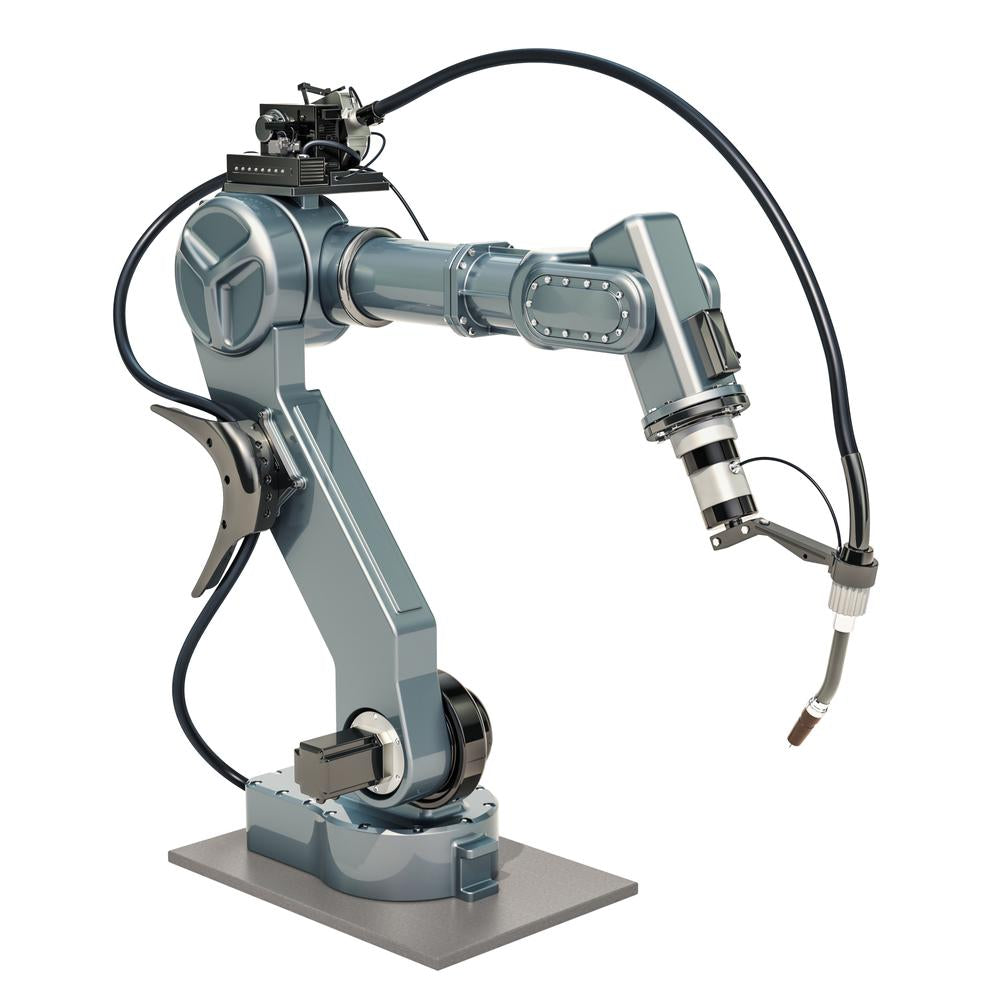 July 20 2023 · Jim RyanTraining at FABTECH 2023FABTECH is coming soon. Please stop by our booth: B20099.
Right there at our FABTECH booth we will offer training on inductive proximity sensors. It's hands-on and fun. Just walk up to us and say hello. You get to see how the sensors work with various metal samples, voltmeters, and micrometer, using our specialized training boards.
KUKA will also offer training at its booth (B27051). It has a welding robot trainer called ready2_educate_arc .
Not going to FABTECH? We will come to your factory and train your employees on our training boards. The training is 100% hands-on, only takes an hour, and is low price. (Very low. Whatever you're guessing, it's lower than that.)
- July 20 2023 · Jim RyanGetting Started with Factory CybersecurityIt's time to get used to the idea that manufacturers are at the top of the list of targets for hackers: state sponsored advanced persistent threats (APTs), hacktivists who despise manufacturing or a certain manufacturer, and criminals who simply want ransom money in as payment for unlocking the victim's data and/or computers. More on this here . Cybersecurity is now necessary for factory OT/ICS systems ((operational technology/industrial control systems). The problem is likely to get worse, given the shortage of cybersecurity specialists and the possibility that in a few years attackers will be able to gain enough control of OT systems to harm people physically . But how to defend against this? Here is a view from 30,000 ft on this ; there are a few more details here , here , here , here , and here . There is a 2016 blog post from Cisco on seven steps you can take here . Finally, there is a list of considerations and best practices in this article . An over-arching theme to all this is that OT/ICS cybersecurity is a special field of expertise in cybersecurity.
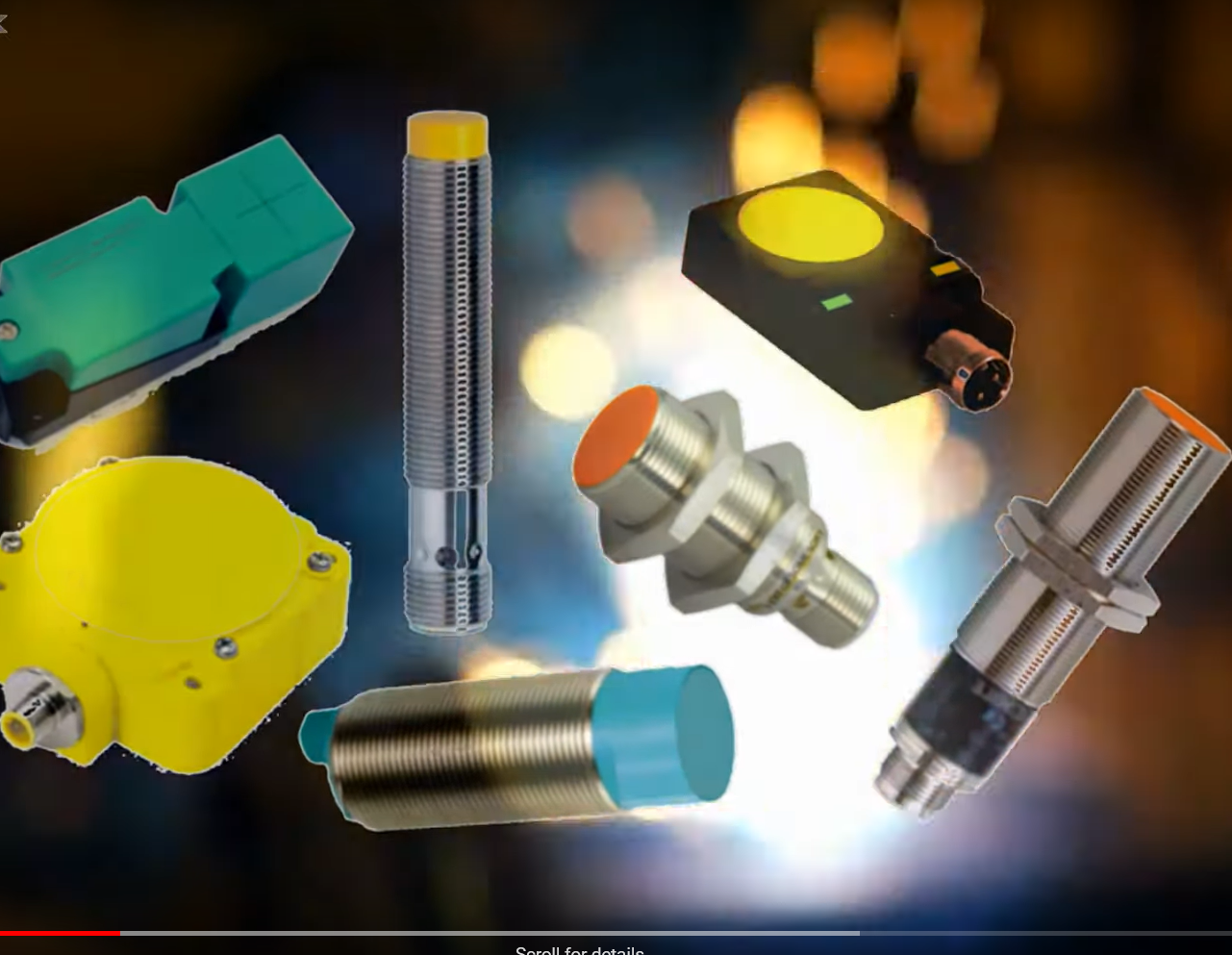 July 19 2023 · Jim RyanColorful Plastic ProxesThey do look pretty, and I even wonder - do they taste sweet like candy? But why use plastic components in a weld cell? Won't they burn out quickly? Weld Dynamix proxes do not burn out. They are metal faced. They are coated with ACTIVSTONE coating so slag doesn't stick. Which is why they don't burn out. (Our cables and cable protection don't burn out, either.)
But these are prettier.
- July 18 2023 · Jim RyanAutomation Doesn't Mean Fewer Manufacturing Jobs?An article from Brad Marley at SME argues that "more automation doesn't mean fewer manufacturing jobs." The idea seems to be that machines will "ensure safety," augment "their human counterparts and allow workers to refocus their efforts on higher value jobs," and bring flexibility and consistency to production. Marley quotes Jan Irzyk of ANCA, who says that "Before workcells came on the scene, there was a lot of manual labor being done on the shop floor" that "required the workers to be in one place for hours doing repetitive tasks." So, Marley's argument seems to be that after automating its manufacturing processes, the number of new "high value" jobs a factory will have will be as great as the number of tedious manual labor jobs it eliminated by automating. It's certainly an interesting claim. If we assume that it is true and we assume that "high value" jobs require larger employee salaries, then we can infer that salary expenses will rise after a manufacturer automates. Of course, there is also the large capital expenditure for acquiring the machines. We seem to be in the red. So, how, then, does automation provide a positive ROI? How do we get back into the black? The answer would have to lie in the better production quality Marley mentions: flexibility, consistency. Add to that the higher rate of production afforded by automation. From these would flow an increase in revenue that would be greater than the increased expense? Big if true!
- July 14 2023 · Jim RyanWeld Cell Operators Need TrainingDan Davis lists the traits that a weld cell operator needs in order to succeed: a self-starter, who knows a little about computers, etc. But Davis closes his article with music to Weld Dynamix's ears: "selecting the right training is imperative" and "shop managers have to find a training approach that engages the would-be operators." Bingo! Davis quotes Buddy Smith, assistant manager of technical training at Motoman: In other words, it's not just a lecture where you say how it works and send you out to the floor," he said. "They need to have some hands-on. They need to be engaged, tested, and evaluated on their skills. Tim Heston has more more on lack of training . He discusses the impact of lack of training of shop culture and has a recommendation: I see two trajectories, one that improves shop culture and another that kills it. The one that kills it lowers the bar for entry-level employees. Machine operation is simpler, so operators learn quickly, which can be great for productivity, but they’re never really given the opportunity to learn more. It’s efficient, but it also means that shop floor operators become totally expendable. They push buttons and work like the devil to meet productivity targets, yet really aren’t taught about process fundamentals or even basic machine maintenance.... Machines crash, and the shop becomes utterly reliant on machine maintenance techs who might take a while to arrive. In short, it’s not a pleasant place to work. The other trajectory doesn’t lower the bar for entry-level employees, just changes it. The entire order-to-ship cycle becomes much more collaborative. Teamwork and cross-training are a given; just because someone stands in front of a machine doesn’t mean he can’t be taught to program it offline. Knowledge isn’t “shifted” away from the shop floor but instead spread throughout the company Weld Dynamix offers hands-on, engaging training for inductive proximity sensors, mounts, and cables. It takes only an hour. It is 100% hands on, with each operator having his or her own training set or "trainor". These trainors are about one foot square and sit on a table right in front of the operator. They have a couple of proxes, a couple of voltmeters, some cabling, and mounts on rails. They are fun to use. As for the cost of the training - let's just say that it is inexpensive. You can guess why. The trainors use Weld Dynamix components. When your team sees these components and what they do, we think you'll want to buy some for your weld cells. So, it's a win-win. You get training for a low price (it's low, believe me!) and an introduction to some components that will drastically reduce downtimes. Weld Dynamix gets to have fun training your team and have a chance to sell you our great components. Win-win!
- July 14 2023 · Jim RyanHelp Getting Started in Robotic Welding: Factory Automation IntegratorsIf you need to automate your process, help selecting an integrator is here and here .
 July 14 2023 · Jim RyanShould I Automate My Manufacturing Process? If So, How Much Should I Automate It?Okay, longish post, for those of you trying to decide whether to automate your manufacturing process and, if the answer is yes, how much to automate it. Lots of links to smart people's thoughts on this below. They shed light on it.
Step back for a moment. If in 2010 you thought that the trough of disillusionment on the Gartner Hype Cycle for autonomous cars would be very deep and would arrive by 2020 or so, you were right. You may have had special insight into how hard the problem was. Or you may simply have been someone who was a bit more jaded about "shiny" new technology and less susceptible to their charms than those who were very excited about an immanent arrival of UGVs. (Perhaps you still listened to vinyl because it sounded better, and so forth.) Whatever the reason, if that was you in 2010, then you simply weren't hypnotized by the idea of cars without either steering wheels or driver's seats.
How do you tell whether you are susceptible to being hypnotized by a "shiny" technological solution? Here are some warning signs:
You take great delight in the cutting-edge nature of the solution
You find yourself calling critics of the solution "naysayers," "backwards thinkers," or "stuck in the past."
You assume that since the solution is high tech, it will offer workarounds for any pain points entailed by adopting it instead of previous technology. These are the pain points noted by the aforementioned critics. You wave them off without really taking them seriously. Why? Because shiny!
You fear being looked at as old fashioned or irrationally slow to adopt good new technology.
In general, love high tech and can't wait for a Star Trek-type utopia in which there are unmanned air-and-ground taxis that show up wherever and whenever you want, dark factories, delicious meals that come out of a wall for free whenever you want, and interstellar warp drive for inexpensive vacation trips.
Here's the point. The fact that a solution is amazingly high tech or clever, cutting edge, or even "bleeding edge" does not make it the right fit for a certain application. Yet, it is still amazing, which can cause it to be selected. I have seen this sort of mistake cost lots of money and time.
Let's take a hackneyed example: wifi vs ethernet cables. Remember ethernet cables? Perhaps your grandparents used them. There are still some true believers . They still have advantages in some applications. They may offer more security, reliability, and speed. They are not as subject to man-in-the-middle attacks as wifi is.
So, what about factory automation? Obviously there are many cases being made today for increasing automation, industrial revolution 4.0 , IoT (internet of things), smart factories , and even dark factories . And there are plenty of articles about the trends driving the move to automation . There is no question that there are good reasons to automate.
Let's take a look at some of the arguments that are strongly in support of greater automation. Kip Hanson has an article at SME that, after beginning with a refreshingly blunt paragraph on the horrible labor shortage the U.S. is facing, states, "To say that success in manufacturing is now an automate-or-die proposition might be hyperbolic—but only slightly." After discussing (again with refreshing bluntness) the expensive but possible high-ROI path toward greater automation, Hanson says that "shops that master automation open the door to the grand prize of manufacturing: lights-out operation, which promises to double or even triple output without additional machine tools, floor space, or the skilled employees that no one can find anyway." Perhaps, but the key word is "promise". He implies, following Courtney Ortner of Absolute Machine Tools, Inc., that "everyone" who "takes the leap of faith" "is a success story" and makes no mention of the possibility that full automation may not be the optimal solution for every floor. Everyone? Really? And managerial decisions shouldn't amount to leaps of faith.
Another example of the hard push for automation is the verbiage in this article , also at SME, by Hooi Tan: "It's Time to Join the Fourth Industrial Revolution" and failure to do so now will "threaten to leave manufacturers in the dark ages" and, quoting Francisco Betti of WEF, "the future belongs to those companies willing...." and "lighthouses are illuminating the future of manufacturing...." While Tan's article is helpful, none of this rhetoric is an argument that full automation is optimal or prudent for any factory.
Few people want to lag "behind" technologically. There is psychological pressure to "keep pace" with others in degrees of automation. Here's a video on why the UK is "behind" on robotics and automation adoption . The video states that this is a "problem" but gives no argument why this is a problem. It says that the UK is a world leader in manufacturing but is 24th in the world for automation adoption (measured in terms of automation density per 10,000 factory workers). So, why shouldn't we believe, instead, that the UK is in the sweet spot, automation density-wise, whereas other countries have adopted automation too aggressively? The video doesn't offer a reason.
Perhaps a more judicious and careful approach to the question of whether and how much to automate might be Michael Bell's Welding Automation ROI and Part Quality , which points out that "It’s important to weigh each consideration against the benefits of an automated cell." The considerations he discusses - infrastructure, workforce, and technology - affect the ROI. Other examples of cautious approaches to the question of whether and how much to automate are this one by Steven Calhoun, this one by Liz Salter, this one at Marlin Steel, and even the discussion of semiautomatic welding (a category which includes cobotic welding and other modalities) here by Austin Weber, who points out that "fully automated welding is often not ideal for every application." All of these approaches to the question of whether and how much to automate suggest that you weigh a variety of considerations germane to your particular circumstances. They do not make rhetorical or emotional appeals. That's prudence.
Finally, we should, as always, keep the Gartner Hype Cycle in mind, for instance here , where Alex Peron surmises that for industrial IoT (internet of things) we are at the peak of inflated expectations on the cycle. (The article is undated.) There is always a trough of disillusionment in the cycle. It may be deep and it may be shallow, but it comes. Factory automation is no exception.
What about weld cells? Would anyone ever consider a wifi replacement for the ethernet cable? After all, wifi is amazing and it isn't vulnerable to welding slag. No, wifi is vulnerable to electromagnetic interference while ethernet cables are not. But what about the weld slag? You can protect your ethernet cables from weld slag ! Simply cover them with Weld Dynamix's ACTIVFLEX Cable Protection - in seconds and without disconnecting your cables at either end! Weld Dynamix weld cell products are ingenious technology. Are they "shiny"? I don't know, but they are definitely the right solution to the endless grind of replacing sensors and cables in your weld cells.
 July 13 2023 · Steve CoulterTregaskiss on Reducing Weld Cell DowntimeIn a 2016 article updated through 2021 , Tregaskiss makes some keen observations and good suggestions, and the article of course discusses the problem of weld spatter, particularly on "consumables".
Some plants even think of their sensors and cables as consumables, since their limited life means frequent, even scheduled, replacement.
My first glimpse into this reality was nearly 20 years ago working on a project with DANA's frame welding facility in Stockton California. Their purchasing manager told me the quarterly spend - just on sensor & cables - was over $45K. Just for sensors and cables!
Weld Dynamix set out to permanently change that consumables paradigm - sensors and cables aren't "consumables" if they're from Weld Dynamix. Now plants can drastically reduce both their downtime and their components costs.
- July 13 2023 · Jim RyanRobot Vision in Automated WeldingA nice blog post from Abagy on this , including illustrations and a video. Even though I spent years developing LIDAR machine vision software, I was unfamiliar with the term "robot vision" until now. (I need to keep up. I only just a few months ago added the term "edge computing" to my vocabulary.) The article tries to clarify robot vision's difference from "machine vision" and "computer vision" but leaves the reader hanging a bit. Alex Owen-Hill at Robotiq's blog has more. What I can glean from his explanation is that robot vision is the sort of machine vision and computer vision that must take into account the robot's motions in its environment and the effects that the robot has on what it's seeing. So, lots of added complexity due to kinematics. That makes sense. From one moment to the next, robo's vision of the world changes due to what robo is doing with itself and to that world. So, robo's software must do some fancy footwork in updating its idea of what it sees accordingly. For instance, if it slices a sphere into two hemispheres, it should "see" that the sphere didn't just disappear followed by the creation of two hemispheres ex nihilo. Or if robo rotates quickly, its machine vision shouldn't simply conclude that the world has radically changed for unknown reasons. Fair enough. "Robot vision," got it! On a related note, here's an article on precision scanning in robotic welding. The article's target is a laser weld seam profiler from Bestech Australia called scanCONTROL. The sensor "is programmed to measure the geometry of the seam to be welded before the actual welding process starts. These high-precision profile measurements enable the welding process to be automated."
- July 13 2023 · Jim RyanMachine MaintenanceThere is a four-part video discussion on predictive maintenance from MathWorks, with the fourth part here , including links to the first three parts. If maintenance in your weld cells is a concern, consider using components that don't need maintenance: proxes, cables, cable protection, and mounts. Switch to Weld Dynamix components. They do not need periodic replacement. No more burnt out proxes. No more burnt out cables. Better mounts. Our ACTIVSTONE coated sensors . Immune to weld slag. Our ACTIVSTONE coated cables and ACTIVFLEX cable protection . Immune to weld slag. Our Vicemount mounts for better protection and sustainability.
- July 13 2023 · Jim RyanMore on Automated Welding in the MilitaryWe noted that the Army had moved toward robotics for the welding needs it has in its vehicle production . Last month Michael Bell of Pemamek had an article on Accurate Data Collection for Welding Process Reporting to the Military at SME's website. It seems that "Manufacturing for the military requires the capture of an immense amount of detail from the conceptual stage to the finished product." Welds are no exception, and apparently automated welding dovetails nicely with the automation of the collection of data pertaining to the welds. Bell says, On the other hand, when doing manual welds, the welder may take a break but there is no documentation as to where, when and how long the break took. There is no record of the stop and start point of the weld, whether a void was created or the degree of adhesion. Moreover, in automation, "The scans perform a double-duty of sorts—then ensure a stable repeatable welding process and capture the process data every step of the way." The article provides illustrations of these ideas, primarily from contractors for the Navy.
- July 13 2023 · Jim RyanWeld Cell Audits, Inductive Proximity Sensors, Cabling, and MountsI almost wonder why weld cell audits are done. I've been reading weld cell audit reports, and I see a lot of repetition across weld cells and across factories. Here are the issues that come up over and over again: Burnt out inductive proximity sensors, covered and damaged by weld slag Burnt out cables, covered and damaged by weld slag Minimal mounting of the aforementioned sensors, leaving them vulnerable to heat and impact, as well as weld slag Why doesn't the audit team simply send a letter saying, "If we did the audit, we'd find burnt out proxes and cables, and inadequate mounts for the proxes, resulting in proxes damaged by heat and impact. Yes? There's your trouble. You don't need us." But of course, there are two reasons the audits are instead done. First, it is hoped that the auditors have ways of reducing these issues marginally, enough to make the cost of the audit worthwhile. Second, there are a few other issues besides the three mentioned above that the auditors can indeed help with. But the trouble is that the auditors have no complete solution to the three issues mentioned above. For example, one suggestion has been to the replacement proxes in a vending machine near the weld cells, so that maintenance techs have them closeby for their frequent replacements they must do. How about an actual solution? Weld Dynamix has it. Proxes that don't burn out. Install them. One and done. Cables that don't burn out. Install them. One and done. Mounts that are robust and that protect the proxes. Proxes that stand up to impact. Watch them do it. Details: Weld Dynamix proxes and cables are coated with ACTIVSTONE coatings , so that they are immune to weld slag. Weld Dynamix proxes are shielded, so they may be flush mounted, protecting them from slag and impact and giving them a better heat sink in the mount. The proxes have great axial range, so that the flush mounting is not a range concern. Don't want to replace your cables? Use Weld Dynamix cable protection. It slips right on in seconds, without your having to disconnect either end of the cable. In conclusion: Weld Dynamix Proxes Weld Dynamix Cables Weld Dynamix Mounts Weld Dynamix Cable Protection
- July 12 2023 · Jim RyanMore on the BasicsMignon D'Souza on the basics of automation in welding . We had a post on the basics here .
- July 12 2023 · Jim RyanTaking the First Step Into Welding AutomationGary Konarska II (CEO of AWS) has twelve tips to consider , if you're trying to decide whether to make the leap to welding robos. Konarska gleaned these points from a panel discussion at FABTECH 2022 which he moderated: "How to Add Automation to Your Business". When you're ready to take the plunge, Tregaskiss has some implementation tips .
- July 12 2023 · Jim RyanDave Bird: Inductive Proximity Sensors Don’t Have to be DisposableBird points out that, really, they don't . Because Weld Dynamix's sensors, cables, mounts, and cable protection are available. One and done. No vending machines. No more burned out sensors and cables. But don't just go rushing in. As Bird notes, you should audit first. He says, "Analyze the root cause of failure first before attacking supply-chain management issues." After that, however, he points out, "The more effort you commit to upgrading outdated weld cell sensor systems, the faster your return on investment." Bird's article even has a slideshow!
- July 12 2023 · Jim RyanHow Tough Are Weld Dynamix Sensors and Mounts?This tough. Wow! I would hate to have been that sensor. Getting beaten hundreds of times by a 4 lb hammer is not my idea of a good time. But it's all in a day's work for these sensors and mounts.
- July 12 2023 · Jim RyanRobot vs Cobot in WeldingThilo Schmitz at Binzel Abicor's blog has a post on the differences . Plus, Michael Tyrrell has an article on cobots in welding at Production Engineering Solutions. Some say that a cobot can boost output tenfold over a human welder alone.
- July 12 2023 · Jim RyanMore on CobotsEmily Newton has a recent article in MachineDesign about bringing artificial intelligence to cobots. The article explains how AI is supposed to improve the cobots' perceptive ability, improve cooperation on the floor, and increase safety. Newton also noted a 2019 study that purported to show that human-cobot teams outperform both human teams and robot teams .
- July 12 2023 · Jim RyanFABTECH 2023 Will Soon Be HereDon't forget FABTECH 2023 is coming up ! It's a bit early this year: September 11 - 14. Weld Dynamix will be there. Please stop by our booth: B20099. If you've never been to a FABTECH convention, prepare to be amazed at how vast the world of metal forming is. The exhibits are amazing and there are so many of them that the mind boggles.
- July 12 2023 · Jim RyanMore on Whether, When, and How to Automate Your Welding ProcessWhether, when, and how are all important questions that have received considerable attention before . Now Nick Drake at Canadian Fabricating & Welding has more on these decisions .
- July 12 2023 · Jim RyanWear Issues Other Than Spatter and Slag in Automated WeldingIn case you missed it, Emil Schubert of ABICOR BINZEL had a nice series of posts last year on reducing downtime in robotic welding over at the Abicor Binzel blog. Dwelling entirely on wear issues other than those produced by spatter and slag, the trilogy of posts deal with the selection of the welding torch and associated parts (contact tip, gas distributor, and liner) , and with the cable assembly, torch mount, switch-off protection, and torch cleaning . Weld Dynamix focuses on issues due to spatter and slag, but it's nice to cover the entire terrain.
- July 11 2023 · Jim RyanArmy Weld Cells?In case you missed it, the U.S. Army is developing weld automation for next generation combat vehicles .
- July 11 2023 · Steve CoulterOkay, But What is Robotic Welding?Never heard of it? A first look from Rice Automation : What is Robotic Welding and what do weld cells and welding robots look like ? This nice video will also give you a taste, featuring an Abagy system at FABTECH last year.
- July 11 2023 · Jim RyanSeth Perrin and Roger Robey on Reducing Welding CostsSpeaking of both automated and semi-automated welding, Perrin points out some overlooked factors, from the importance of GMAW gun selection and (with Roger Robey) a variety of other considerations , even including maintaining "a clean, temperature controlled facility." Perrin and Robey say something that is music to our ears here at Weld Dynamix: While it’s tempting to buy the cheapest contact tips, nozzles, and gas diffusers available, they typically don’t last as long as high-quality products, and they cost more in labor and downtime due to more frequent changeover. Shops shouldn’t be afraid to test different products and run documented trials to find the best options. When a shop finds the best consumables, it can save time in inventory management by using the same ones across all welding operations in the facility. However, Perrin and Robey don't mention sensors, mounts, or cables. Don't forget those. Weld Dynamix has a line of these that eliminates the need for replacement: "one and done" products, such as Weld Dynamix's ACTIVSTONE coated sensors</a> and cables , Vicemount mounts , and ACTIVFLEX cable protection .
- July 11 2023 · Jim RyanDave Bird on PMA Panel Next WeekToday the first of three Precision MetalForming Association Panels was held. The second MetalForming LIVE panel happens next week (Tuesday, July 18, 2 - 3:30 pm ET) and it features Dave Bird, along with Dean Phillips, Paul Stirrett, and Todd Wenzel, the topic being "Automation in the Pressroom — Optimizing Revenue per Employee". The third and final panel takes place a week later, as described in the link.
- July 11 2023 · Jim RyanFifteen Years After Dave Bird's Started Saying That Weld Cell Sensors and Cables Needn't FailThe problem of "sensors and slag" is, of course, as old as automated welding. Rudimentary, brief discussions of the issue include Robert Repas's 2005 discussion of solutions and Tony Udelhoven's 2008 similar view . These articles suggest, among other things, front caps of metal and Teflon for sensors. Then, around fifteen years ago Dave Bird began providing very specific, practical, and initially viable solutions. At Weld Dynamix we hail Bird's ideas as the first generation of solutions to weld cell component failure. Back then, Bird noted a key psychological point: that it can seem normal that weld cell components reach end-of-life quickly and must be replaced frequently. It's like the milk in your fridge. It sours and then you buy a fresh carton. This seems normal. You don't wonder why dairies can't make it stay fresh for years. But weld cell component failures needn't be normal anymore. Weld Dynamix has a next generation of solutions that make crucial advances. First, let's review the issues. Bird listed several reasons for component failure. Sensors are not matched to the application, are placed incorrectly in the cell, and are not protected from heat, slag and impact. Cables and mounts aren't protected or designed to stand up to such a hostile environment. Think for a moment. Is there some reason that it should seem normal to see plastic components in a weld cell? No. Can't mounts be robust, and can't sheilded sensors be used so that they can be flush-mounted, enabling them to evade impact and slag? And can't sensors and cables be protected so that the slag doesn't harm them even when it does make contact? Yes. Weld Dynamix sensors, mounts, cables, and cable protection make these improvements possible. These components last indefinitely long: one and done . Moreover, the cable protection can be installed onto cables without disconnecting the cables at either end . Bird offered good initial solutions that were prescient of Weld Dynamix's ACTIVSTONE coated sensors and cables , Vicemount mounts , and ACTIVFLEX cable protection . These Weld Dynamix products fulfill Bird's vision. When you switch out your weld-cell components, use Weld Dynamix components.
- July 11 2023 · Jim RyanFully Automated Factories and Warehouses?Here's a short read and a view from 30,000 ft, mainly from the perspective of supply chain facilities, from Sharon Spielman at MachineDesign Dark Factories: Science Fiction or Reality . The article notes that sophisticated sensors found in automated welding are a step along the way towards "dark factories". However, the big think in the article is that people will need to cede power, in order for these factories to be realized. People don't like to cede power. Moreover, caution should be exercised. Is the goal of dark factories seductive because it sounds so high tech? Will these factories really be optimally fulfill human wants an needs? "Because it's so high tech and cool!" is not a reason to adopt. And the inference from "An increase in automation in our production lines" to "We ought to strive for 100% automation" is certainly an invalid one. So, what gives. Last month, Christian Heck and Nash Chakraborty some thoughts on how and why to businesses may move toward dark factories: Lights-out Manufacturing: Myths Versus Realities . As for the "why", if you read between the lines, Heck and Chakraborty seem to be saying that dark factories will tend to ensure a sustainability and productivity because nowadays, and into the foreseeable future, it is no longer easy to find and hire human labor. There is a one-hour panel this month on full automation: Lights Out Manufacturing , featuring Rehana Begg of Machine Design, Kevin Cradduck of Fabco-Air (Festo), and Jerry Perez of Fanuc America Corp.